

Orthodontic treatment straightens teeth and corrects the bite using braces or similar appliances. It can take anywhere from several months to two years or more, and the person guiding your treatment matters as much as the appliance itself. This page explains how braces work, what to be careful about when choosing a practice, and how ChooseDentist can help you shortlist and compare providers.
Orthodontics explained in a minute
Prefer to watch? This short narrated video covers what the treatment involves, what to be careful about and how to compare practices. Turn the sound on for the voiceover, or follow the on-screen captions.
What is orthodontic treatment?
Orthodontics moves teeth gently into better positions using steady pressure. Fixed braces use brackets bonded to the teeth with a wire running through them. Lingual braces sit behind the teeth, and ceramic braces use tooth-coloured brackets that are less noticeable. Removable clear aligners are covered in our separate Invisalign guide.
People seek orthodontic care for crowding, gaps, overbites, underbites and crossbites. Beyond appearance, straighter teeth can be easier to clean, and a corrected bite may reduce uneven wear. Adults are increasingly common patients, and age is rarely a barrier provided your gums and teeth are healthy.
What to expect from start to finish
Orthodontic care follows a predictable path, though the length of each stage varies from person to person:
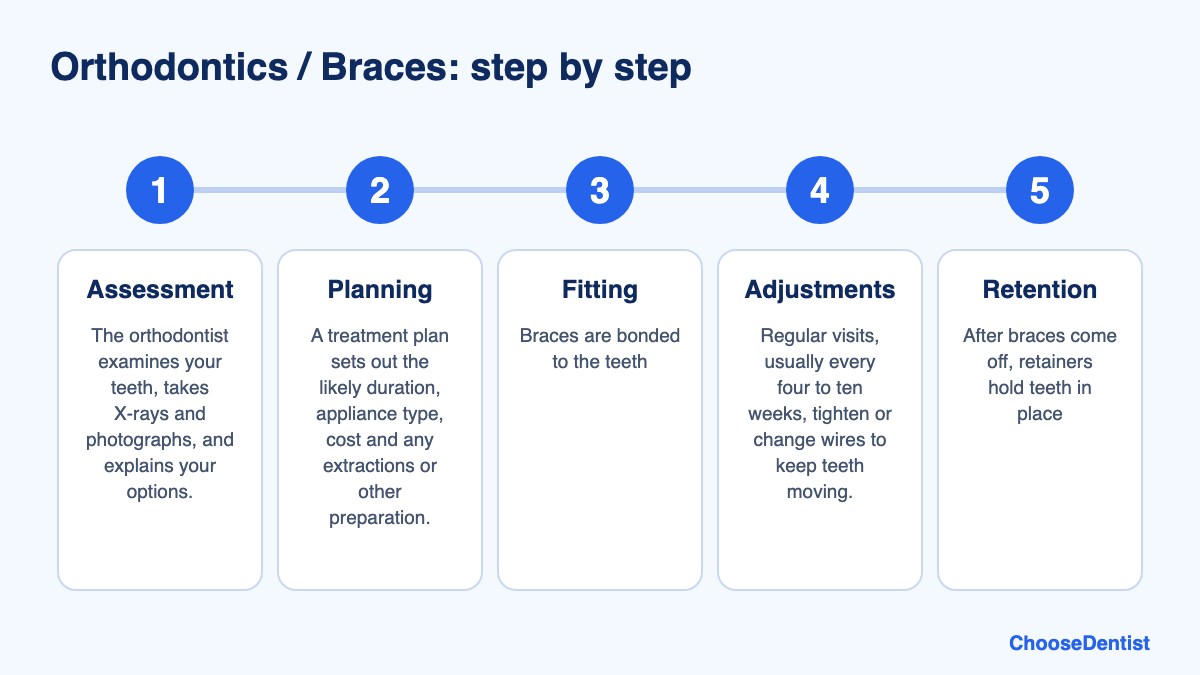
- Assessment. The orthodontist examines your teeth, takes X-rays and photographs, and explains your options.
- Planning. A treatment plan sets out the likely duration, appliance type, cost and any extractions or other preparation.
- Fitting. Braces are bonded to the teeth. You are shown how to clean around them and what foods to avoid.
- Adjustments. Regular visits, usually every four to ten weeks, tighten or change wires to keep teeth moving.
- Retention. After braces come off, retainers hold teeth in place. Skipping retainers is the most common cause of relapse.
Cost and NHS availability
NHS orthodontic treatment is generally limited to children and teenagers under 18 who have a clear clinical need, which is assessed using a national scoring system. Waiting lists can be long. Adults usually pay privately, and fixed braces commonly cost from around £2,000 to £5,000 depending on complexity and appliance type.
Ask whether the quote includes retainers and any review appointments after your braces come off, as these are sometimes charged separately.
What to be cautious about when choosing a dentist for orthodontics
Not every practice offers the same standard of care, and the right choice depends on your needs. These are the points most worth checking before you commit to orthodontics:
Check whether the clinician is a specialist
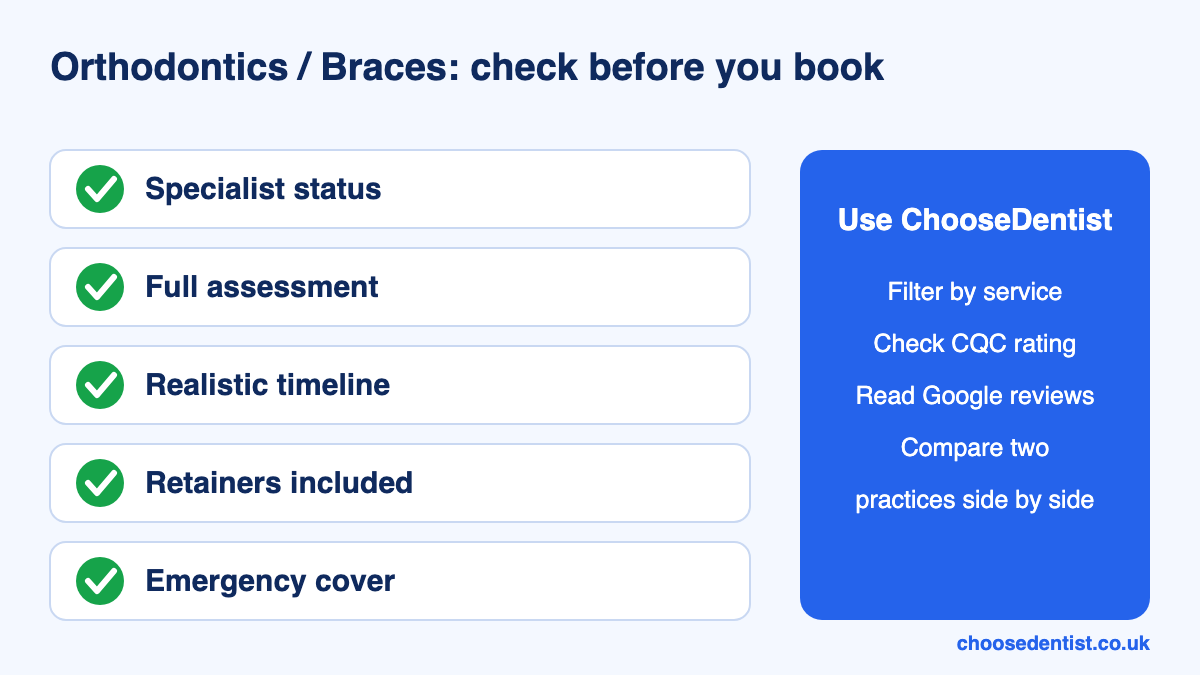
Any registered dentist can offer braces, but a specialist orthodontist has completed several additional years of postgraduate training. The GDC specialist list shows who holds this title, so ask which applies to your clinician.
Insist on a proper assessment
Be wary of anyone who promises results without examining you, taking records, or discussing alternatives and limitations.
Be cautious of very fast claims
Teeth need time to move safely. Treatment promised in unrealistically short timeframes may compromise results or gum health.
Ask who will see you at each visit
Find out whether the orthodontist or a trained team member carries out adjustments, and what happens if a bracket breaks outside normal hours.
Understand retainer commitments
Retainers are usually lifelong or long-term. Make sure you know the cost and what happens if one is lost or broken.
Keep your general dentist involved
You still need regular check-ups and hygiene visits during treatment because braces make plaque easier to trap.
Questions to ask at your consultation
A good practice will welcome questions. Consider taking this list with you or asking it by phone:
- Are you a specialist orthodontist?
- How long will my treatment take?
- What is included in the total fee?
- Who carries out my adjustments?
- What happens if a bracket breaks?
- How long will I need retainers?
How to use ChooseDentist to find a orthodontic dentist
ChooseDentist is a free directory and comparison tool for dental practices across the UK. It will not make the decision for you, but it can save a lot of time. Here is a simple way to use it:
- Filter for the treatment. Open the practice directory filtered for orthodontics, search by postcode and narrow the results to practices that list this service.
- Check the regulatory details. Each practice profile shows whether it is registered with the Care Quality Commission, its inspection rating where one exists, and whether its GDC registration is displayed. Other UK nations have their own regulators, so check the relevant one if you live outside England.
- Read the ratings and reviews. Look at the Google rating and the number of reviews, then read what patients say about how well the team explained progress, kept to the timeline and handled emergencies.
- Check the practical details. Profiles help you spot useful extras such as evening and weekend appointments, which are useful for school or work, and whether payment plans are offered.
- Compare practices side by side. Select up to two practices and open the comparison view to see ratings, services, opening hours and costs in a single table.
- Phone before you book. Use the questions above and trust your instincts about how helpful and open the team is.
Listings are compiled from public sources and information supplied by practices, so details such as services, prices and availability can change. Always confirm them with the practice directly before booking.
Frequently asked questions about orthodontics
Am I too old for braces?
No. Adults of any age can have orthodontic treatment if their teeth and gums are healthy. Discreet options such as ceramic or lingual braces suit many adults.
Can I get braces on the NHS?
Usually only if you are under 18 and your teeth meet the clinical need threshold. Adults are generally treated privately.
Do braces hurt?
You may feel pressure and tenderness for a few days after fitting or tightening. This normally settles quickly and can be eased with standard pain relief.
Ready to find a practice?
Take the next step by browsing practices that offer orthodontics, then compare your shortlist to choose the one that feels right for you.
This page offers general information to help you choose a dental practice. It is not clinical advice and does not replace an examination by a registered dentist. Costs shown are rough guides and vary by practice and region.