
Dental anxiety is very common, and sedation can help many nervous patients receive the care they need in comfort. Sedation is not the same as being put to sleep, and its safety depends on proper training, monitoring and equipment. This guide explains the types of dental sedation, what to be cautious about when choosing a practice, and how ChooseDentist can help you find one that suits you.
Dental Sedation explained in a minute
Prefer to watch? This short narrated video covers what the treatment involves, what to be careful about and how to compare practices. Turn the sound on for the voiceover, or follow the on-screen captions.
What is dental sedation?
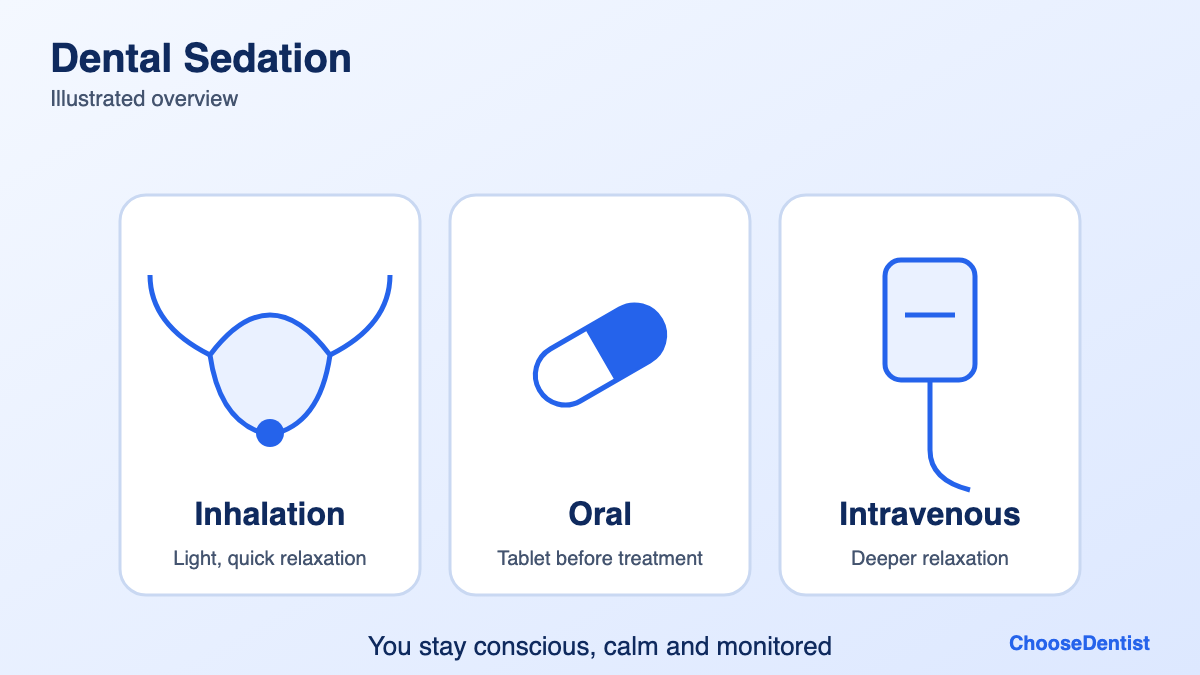
Dental sedation uses medication to help you feel relaxed during treatment while you remain conscious and able to respond. There are three main kinds. Inhalation sedation, often called laughing gas, is breathed through a mask, takes effect quickly and wears off soon after. Oral sedation involves taking a tablet beforehand. Intravenous sedation is given through a small tube in the hand or arm, produces a deeper level of relaxation and often leaves you with little memory of the procedure.
Sedation is used for people with dental phobia, a strong gag reflex, difficulty keeping still, or for longer or more complex procedures such as implant surgery. It works alongside local anaesthetic, which numbs the area being treated. Some patients may not be suitable for certain types of sedation because of their medical history, so a thorough health review is essential.
What to expect on the day
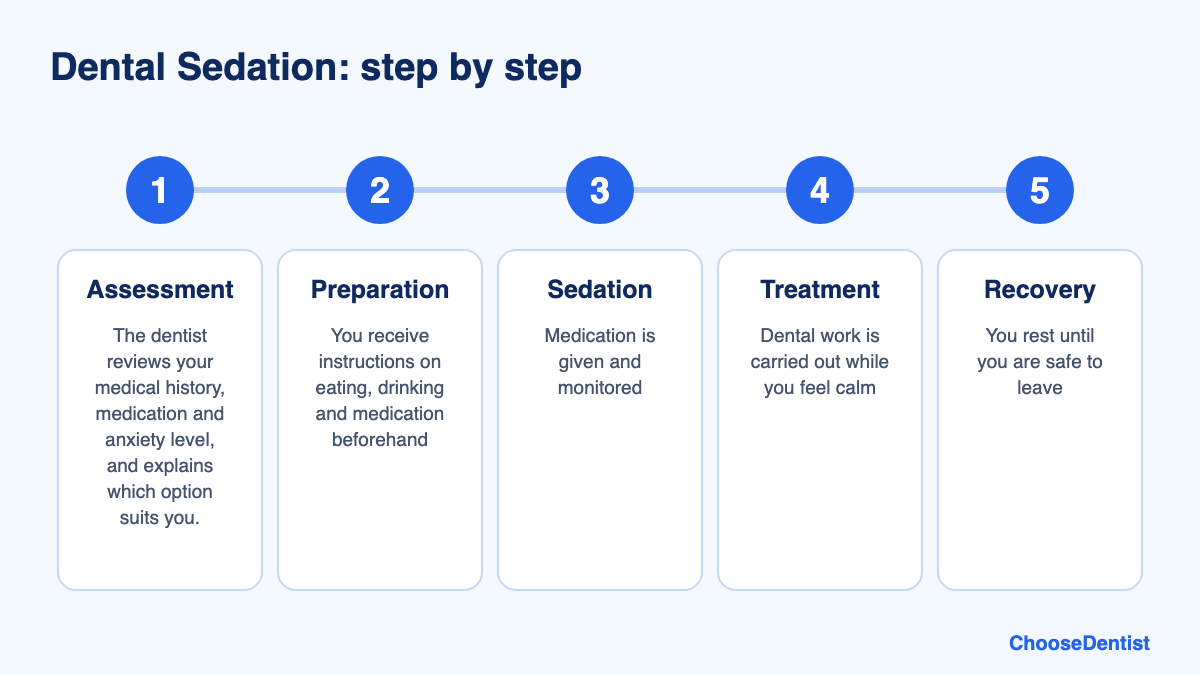
Although details vary with the type of sedation, the sequence is usually as follows:
- Assessment. The dentist reviews your medical history, medication and anxiety level, and explains which option suits you.
- Preparation. You receive instructions on eating, drinking and medication beforehand. For oral and IV sedation you will need an escort.
- Sedation. Medication is given and monitored. Your pulse, oxygen levels and breathing are watched throughout.
- Treatment. Dental work is carried out while you feel calm. Local anaesthetic keeps the area numb.
- Recovery. You rest until you are safe to leave. Oral and IV patients should not drive, work or make big decisions for the rest of the day.
Cost and NHS availability
Sedation is often an additional private fee on top of the dental treatment. As a rough guide, inhalation sedation can cost from around £50 to £150 per session, while IV sedation often costs several hundred pounds per appointment. Some NHS areas provide referral services for anxious patients who need sedation for treatment, though availability varies.
Ask whether the quoted fee covers the sedation, the monitoring and the recovery time, and whether there is a separate charge for the dental treatment itself.
What to be cautious about when choosing a dentist for dental sedation
Not every practice offers the same standard of care, and the right choice depends on your needs. These are the points most worth checking before you commit to dental sedation:
Ask about training and standards
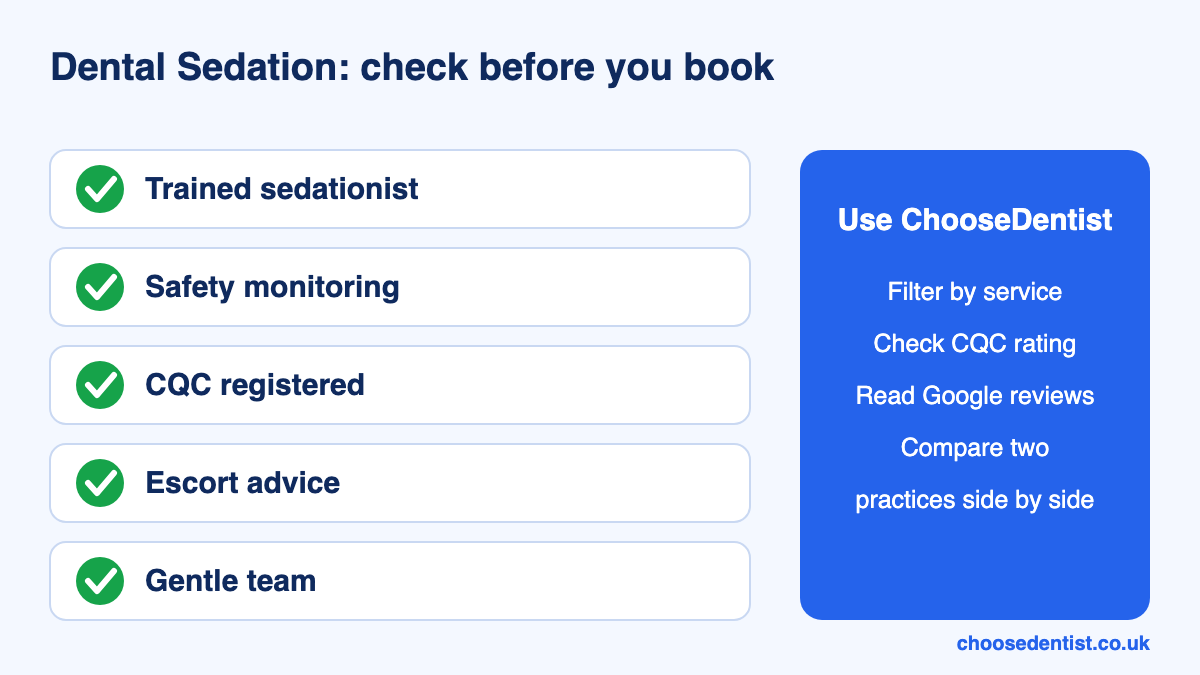
Dentists providing conscious sedation should have appropriate training and follow national guidance on safe practice. Ask what sedation training they hold and how they keep it up to date.
Check the team and monitoring
IV sedation should involve a trained sedationist and appropriately trained dental nurse, with monitoring equipment and emergency drugs on hand.
Be honest about your medical history
Tell the dentist about conditions, medication, allergies, pregnancy and alcohol use. This affects whether sedation is safe for you.
Arrange an escort and aftercare
For oral and IV sedation, you will need a responsible adult to accompany you home and stay with you. Practices that do not mention this deserve questions.
Do not treat sedation as a substitute for trust
A caring, patient team matters just as much. Look for a practice that offers gentle approaches and lets you pause or stop.
Check the practice is CQC registered
Practices providing sedation in England must be registered with the Care Quality Commission, and the inspection report can be read online.
Questions to ask at your consultation
A good practice will welcome questions. Consider taking this list with you or asking it by phone:
- What sedation training do you hold?
- Which type of sedation do you recommend for me?
- How will I be monitored?
- Who needs to come with me?
- What does the sedation fee include?
- Can I meet the team beforehand?
How to use ChooseDentist to find the right practice for dental sedation
ChooseDentist is a free directory and comparison tool for dental practices across the UK. It will not make the decision for you, but it can save a lot of time. Here is a simple way to use it:
- Filter for the treatment. Open the practice directory filtered for dental sedation, search by postcode and narrow the results to practices that list this service.
- Check the regulatory details. Each practice profile shows whether it is registered with the Care Quality Commission, its inspection rating where one exists, and whether its GDC registration is displayed. Other UK nations have their own regulators, so check the relevant one if you live outside England.
- Read the ratings and reviews. Look at the Google rating and the number of reviews, then read what patients say about how calm and supported nervous patients felt, and whether the team took anxiety seriously.
- Check the practical details. Profiles help you spot useful extras such as whether sedation is listed, wheelchair access, parking for your escort and online booking so that you can avoid phone calls.
- Compare practices side by side. Select up to two practices and open the comparison view to see ratings, services, opening hours and costs in a single table.
- Phone before you book. Use the questions above and trust your instincts about how helpful and open the team is.
Listings are compiled from public sources and information supplied by practices, so details such as services, prices and availability can change. Always confirm them with the practice directly before booking.
Frequently asked questions about dental sedation
Will I be asleep during dental sedation?
Not usually. Conscious sedation keeps you relaxed but responsive. General anaesthesia, where you are fully asleep, is a different procedure carried out in hospital settings.
Is dental sedation safe?
When provided by properly trained clinicians after a health assessment, sedation is generally safe, but all sedation carries some risk. This is why the training and monitoring questions matter.
Can children have dental sedation?
In some circumstances, yes, but specialist assessment is important. Ask the practice about their experience with children's sedation.
Ready to find a practice?
Take the next step by browsing practices that offer dental sedation, then compare your shortlist to choose the one that feels right for you.
This page offers general information to help you choose a dental practice. It is not clinical advice and does not replace an examination by a registered dentist. Costs shown are rough guides and vary by practice and region.