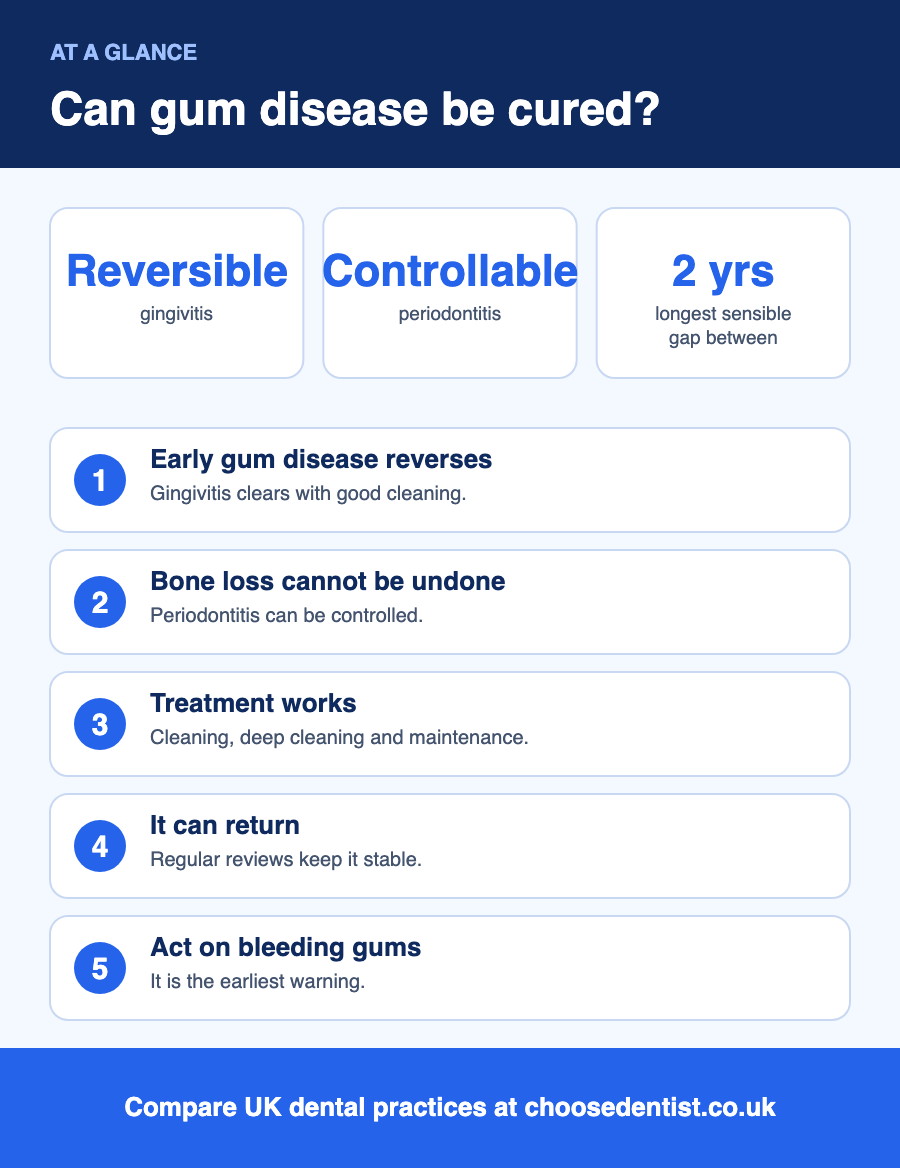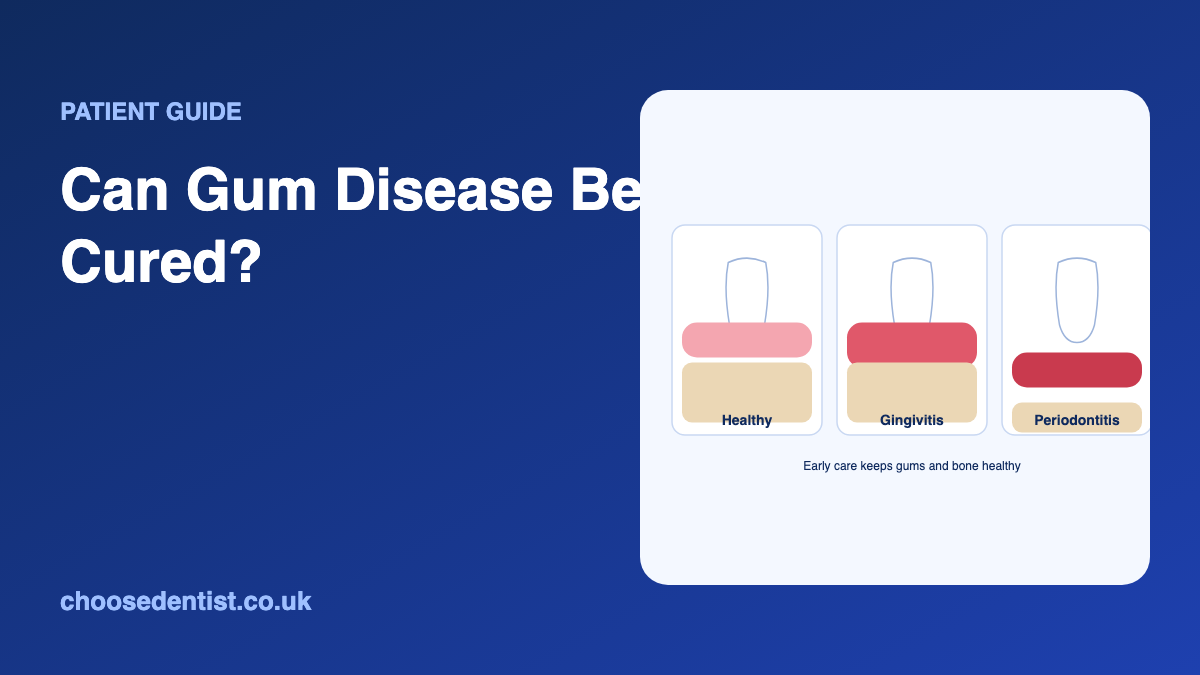
Early gum disease can be reversed, and established gum disease can be controlled, but damage to the bone that supports the teeth cannot be fully undone. The distinction matters because the outlook depends on how far the disease has progressed when it is found. Gingivitis, in which the gums are red, swollen and bleed easily, usually clears completely with better cleaning, whereas periodontitis, in which bone has been lost, needs ongoing care to stop it getting worse.
For people worried about gum disease treatment, this is both reassuring and a reason to act early. The sections below explain the stages, what treatment can achieve and what keeps the disease from coming back.
The stages of gum disease
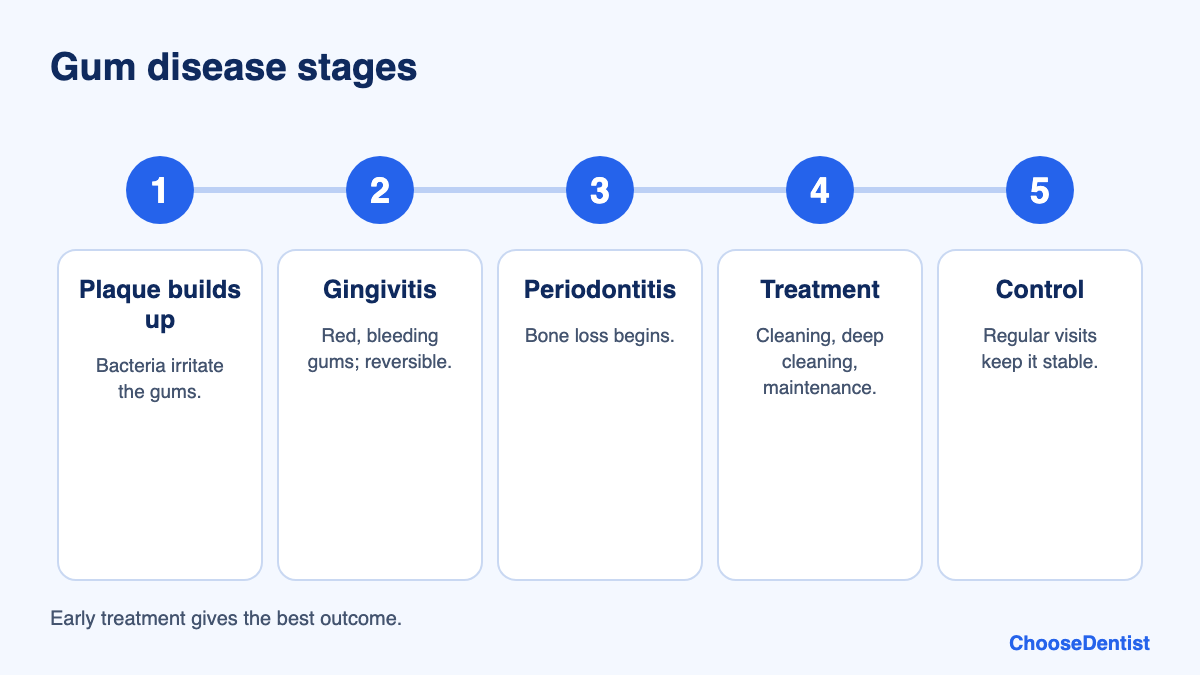
The NHS explains on its page about gum disease that it is caused by a build-up of plaque on the teeth, which irritates the gums. At first, the gums become red, swollen and sore and bleed when brushing, flossing or eating hard foods. This early stage is called gingivitis. If it is left, it can progress to periodontitis, in which the gums shrink, pockets form around the teeth and the bone beneath is gradually lost, leading in time to bad breath, loose teeth, abscesses and tooth loss.
Gum disease often causes no pain until it is advanced, so bleeding gums are an important warning.
| Stage | What is happening | Outlook |
|---|---|---|
| Healthy gums | Pink, firm, no bleeding | Maintain with good cleaning |
| Gingivitis | Red, swollen gums that bleed; no bone loss | Fully reversible with better cleaning |
| Periodontitis | Gums shrink, pockets form, bone is lost | Can be controlled, not fully reversed |
| Advanced periodontitis | Loose teeth, abscesses | Needs specialist care; some teeth may be lost |
What can be reversed
Gingivitis is reversible. Once plaque is removed thoroughly and kept off the teeth, the inflammation settles and the gums return to health, usually within a couple of weeks. The NHS advises improved tooth cleaning, including the use of interdental brushes, stopping smoking if you smoke and a hygienist clean in the early stages.
Nothing about this requires drilling or surgery. It requires attention to the places where brushing alone does not reach, which a hygienist can identify and teach you to clean.
What can only be controlled
Periodontitis is different. Bone and gum that have been lost do not grow back by themselves, although some surgical procedures can regenerate part of the lost support in selected cases. The aim of treatment is to remove the bacteria and tartar that drive the disease, reduce the depth of the pockets and keep the condition stable. The NHS says that in serious cases treatment may involve deep cleaning under the gums, antibiotics, tooth removal or gum surgery.
With treatment and regular maintenance, most people can keep their teeth for many years. Without it, the disease tends to progress, often unnoticed.
How treatment works
Treatment begins with assessment, including measurement of pocket depths and X-rays where needed. A hygienist or dentist then cleans the teeth thoroughly, often over several visits, and teaches you how to clean at home. The Dorset County Hospital leaflet on visiting the hygienist describes advice on brushing, cleaning between the teeth, diet and fluoride, together with antibacterial gels or solutions placed under the gum for adults with gum disease and support to stop smoking.
Deep cleaning of the roots, sometimes done under local anaesthetic, is used in more advanced cases. The gums are measured again some weeks later to see how they have responded, and some patients are referred to a periodontist for further treatment.
Keeping it from coming back
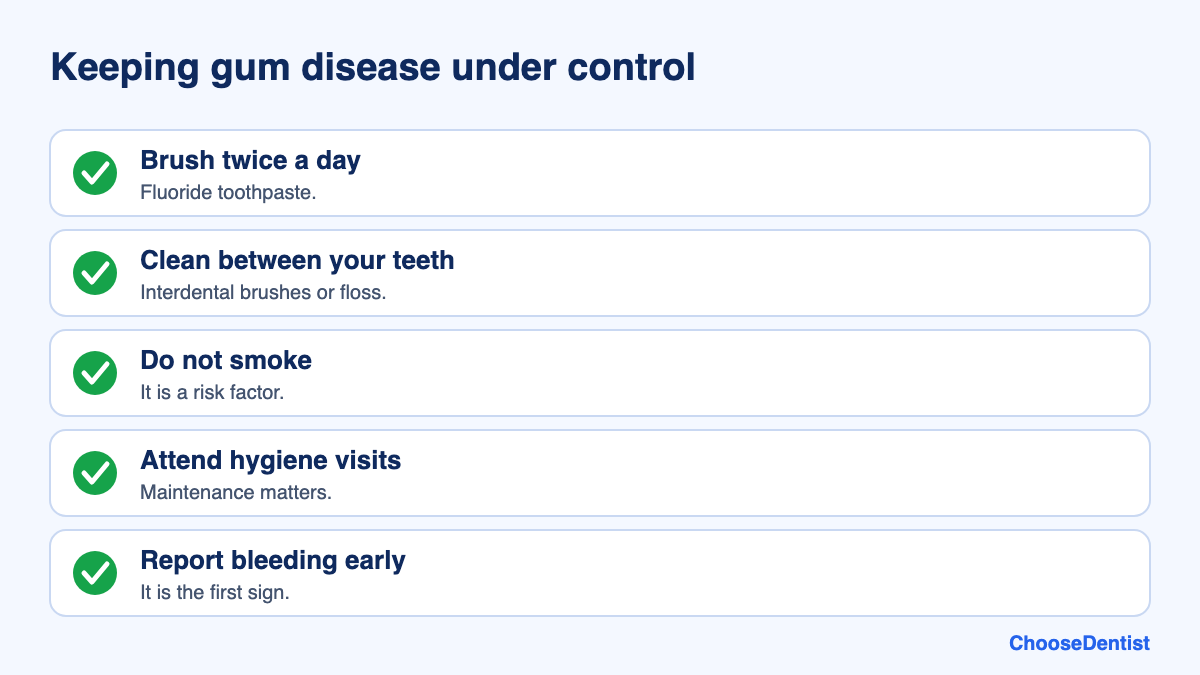
Maintenance is the key. Brushing twice a day with fluoride toothpaste, cleaning between the teeth daily, not smoking and attending regular hygiene visits keep plaque under control. The NHS advises regular check-ups, especially for people who are pregnant or have type 2 diabetes, and lists not smoking among the preventive measures.
Gum disease is a chronic condition, a little like high blood pressure, and it needs lasting habits and regular reviews. People who have had it are at higher risk of it returning, so their hygiene visits are usually more frequent.
Why bleeding gums should not be ignored
It is easy to blame bleeding on brushing too hard, but the NHS lists bleeding gums as the first symptom of gum disease and advises seeing a dentist if gums are painful, swollen or bleed when brushing. The tissue of a healthy gum does not bleed with normal cleaning. Brushing less to avoid bleeding lets plaque accumulate and makes the problem worse, whereas brushing carefully along the gum line and cleaning between the teeth usually reduces the bleeding within a couple of weeks. If it does not, there may be hardened tartar that only a professional can remove.
Risk factors you can change
Several risk factors for gum disease are within your control. The NHS lists smoking as a risk factor and recommends not smoking, and it advises regular check-ups, especially for people who are pregnant or have type 2 diabetes. Keeping blood sugar well controlled, cutting down on sugary snacks, brushing for two minutes twice a day and using interdental brushes all reduce the burden on the gums. A dentist can also check whether medicines are causing a dry mouth, which makes gum problems more likely.
Long-term outlook
With treatment and maintenance, most people with gum disease keep their teeth. The outlook depends on how early the disease is found, how well plaque is controlled at home and how regularly the gums are reviewed. People who stop smoking and attend their hygiene visits do considerably better. If teeth are lost, replacement options such as bridges, dentures or implants are available, though implants need healthy gums, and gum disease must be controlled before they are placed.
Gum disease and general health
Gum disease is not only a problem for the mouth. The NHS recommends regular check-ups especially for people who are pregnant or have type 2 diabetes, because these conditions interact with gum health. Poorly controlled blood sugar makes gum infection harder to treat, and untreated gum disease can make blood sugar harder to control, so treating one often helps the other. Anyone with a long-term condition should tell the dentist and hygienist, who can adapt the schedule.
NHS and private options across the UK
Treatment for gum disease is available on the NHS where it is clinically necessary. In England, simple gum care such as scaling falls in the lowest band and more extensive gum disease treatment in the middle band, according to the NHS page on how much NHS dental treatment costs. Charging for NHS dentistry differs across the four nations. England has three bands and an urgent charge, Wales numbered bands and an urgent charge with a contract reform under way, Scotland free examinations and free treatment under 26 with a capped share of the cost for other adults, and Northern Ireland a percentage of the dentist’s fee up to a ceiling per course. The amount of hygienist time available on the NHS varies, so it is worth asking how many appointments you can expect.
Private gum care costs vary with the extent of treatment. A course of deep cleaning commonly costs several hundred pounds, and specialist periodontal treatment more. A written plan should list the number of visits and the review arrangements.
When to see a dentist
See a dentist if you have bleeding gums, swollen or sore gums, a persistent bad taste or bad breath, gums that are shrinking or teeth that feel loose. The NHS recommends a check-up if you have not had one in two years, or one year if under 18.
The ChooseDentist directory of gum disease practices can be searched by postcode, with CQC and Google ratings shown where available. Two practices can be compared side by side, and gum treatment and hygienist availability should be confirmed directly with the practice.