
Cosmetic dentistry focuses on improving the look of your smile, from small changes such as bonding a chipped tooth to complete smile makeovers. Because many cosmetic treatments permanently alter healthy teeth, choosing the right dentist is one of the most important decisions you will make. This guide explains the main options, the cautions worth knowing, and how to use ChooseDentist to compare practices.
Cosmetic Dentistry explained in a minute
Prefer to watch? This short narrated video covers what the treatment involves, what to be careful about and how to compare practices. Turn the sound on for the voiceover, or follow the on-screen captions.
What does cosmetic dentistry include?
Cosmetic dentistry is not a single procedure. Common treatments include teeth whitening, composite bonding to reshape or repair teeth, porcelain veneers, crowns, gum contouring and clear aligners to straighten teeth. A smile makeover combines several of these in a coordinated plan.
Good cosmetic dentistry balances appearance with health and function. The aim is a smile that suits your face and looks natural, without removing more tooth structure than necessary. Treatments range from reversible, such as whitening and bonding, to irreversible, such as veneers that require reshaping the teeth, so understanding the long-term commitment matters.
How a smile makeover usually progresses
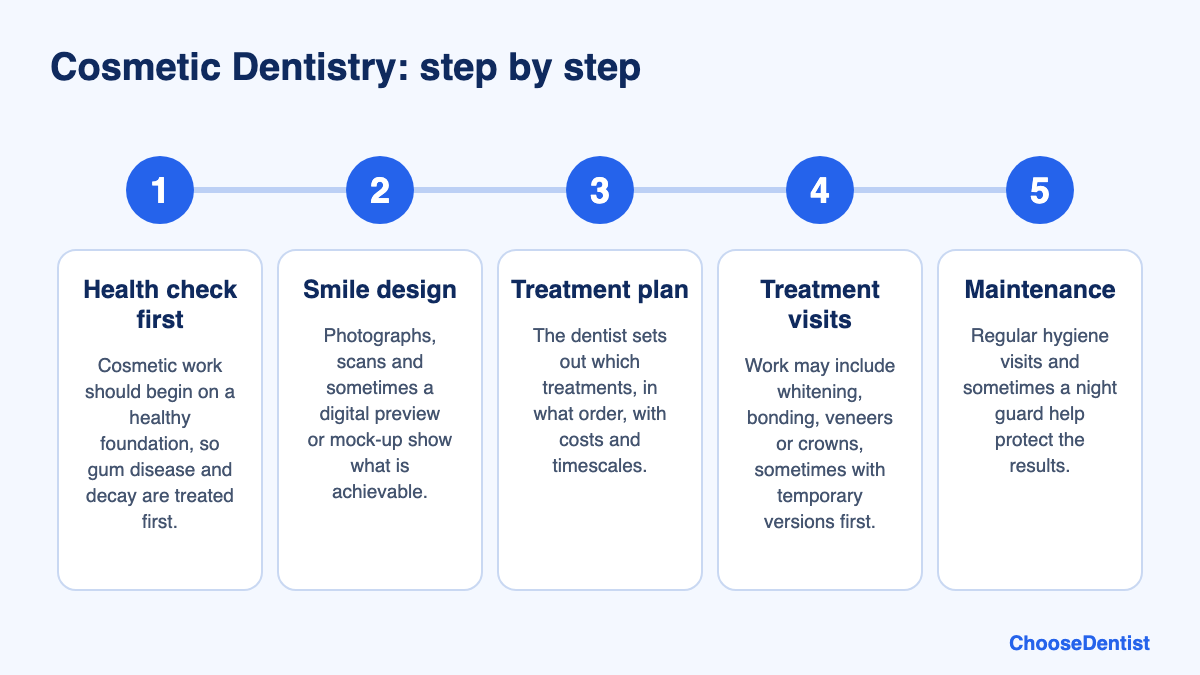
A well-planned makeover tends to follow these steps:
- Health check first. Cosmetic work should begin on a healthy foundation, so gum disease and decay are treated first.
- Smile design. Photographs, scans and sometimes a digital preview or mock-up show what is achievable.
- Treatment plan. The dentist sets out which treatments, in what order, with costs and timescales.
- Treatment visits. Work may include whitening, bonding, veneers or crowns, sometimes with temporary versions first.
- Maintenance. Regular hygiene visits and sometimes a night guard help protect the results.
Cost and NHS availability
Cosmetic treatment is private. Prices vary widely: composite bonding may start from around £150 to £400 per tooth, while a full makeover involving veneers or crowns can run into several thousand pounds. The NHS covers dental work that is clinically necessary, not purely cosmetic.
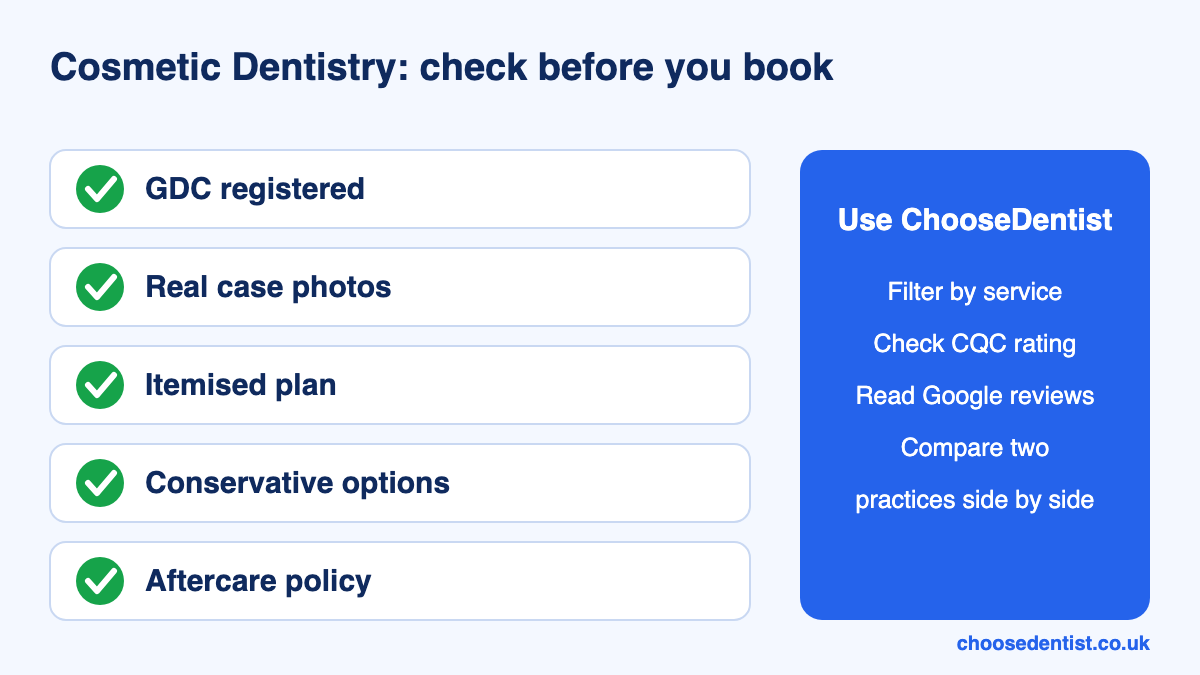
Ask for an itemised written plan so that you can compare quotes properly and see which parts are essential or optional.
What to be cautious about when choosing a dentist for cosmetic dentistry
Not every practice offers the same standard of care, and the right choice depends on your needs. These are the points most worth checking before you commit to cosmetic dentistry:
Look at real before-and-after cases
Ask to see examples of the dentist's own work, ideally cases similar to yours. Photos supplied by the patient with permission are more trustworthy than stock images.
Watch for over-treatment
A good dentist will explain conservative options first and be honest if you do not need extensive work.
Understand what is irreversible
Reshaping teeth for veneers or crowns cannot be undone. Make sure you understand the long-term maintenance and replacement cycle.
Check qualifications and training
The title cosmetic dentist is not a protected specialty. Ask about postgraduate courses and memberships, and confirm GDC registration.
Be wary of pressure and deadlines
Limited-time offers should not rush a decision on permanent treatment. You should have time to think.
Clarify the aftercare
Ask what happens if a restoration chips or the colour changes, and whether any guarantee applies.
Questions to ask at your consultation
A good practice will welcome questions. Consider taking this list with you or asking it by phone:
- Can I see cases similar to mine?
- What are the less invasive options?
- Which parts are irreversible?
- What is the total cost and timeline?
- What guarantee applies to the work?
- How will I maintain the results?
How to use ChooseDentist to find the right practice for cosmetic dentistry
ChooseDentist is a free directory and comparison tool for dental practices across the UK. It will not make the decision for you, but it can save a lot of time. Here is a simple way to use it:
- Filter for the treatment. Open the practice directory filtered for cosmetic dentistry, search by postcode and narrow the results to practices that list this service.
- Check the regulatory details. Each practice profile shows whether it is registered with the Care Quality Commission, its inspection rating where one exists, and whether its GDC registration is displayed. Other UK nations have their own regulators, so check the relevant one if you live outside England.
- Read the ratings and reviews. Look at the Google rating and the number of reviews, then read what patients say about natural-looking results and whether patients felt the plan was honest and unpressured.
- Check the practical details. Profiles help you spot useful extras such as whether the practice lists whitening, veneers and aligners together, evening appointments and payment plans.
- Compare practices side by side. Select up to two practices and open the comparison view to see ratings, services, opening hours and costs in a single table.
- Phone before you book. Use the questions above and trust your instincts about how helpful and open the team is.
Listings are compiled from public sources and information supplied by practices, so details such as services, prices and availability can change. Always confirm them with the practice directly before booking.
Frequently asked questions about cosmetic dentistry
Is cosmetic dentistry safe?
When carried out by a suitably trained dentist on healthy teeth, yes. The key risks come from poor planning or removing too much tooth, which is why the choice of dentist matters.
How long do cosmetic treatments last?
Whitening fades over months to years, bonding typically lasts several years, and porcelain restorations can last a decade or longer with good care.
Can I try before I commit?
Many practices offer digital previews or temporary mock-ups so that you can see the likely result before permanent work begins.
Ready to find a practice?
Take the next step by browsing practices that offer cosmetic dentistry, then compare your shortlist to choose the one that feels right for you.
This page offers general information to help you choose a dental practice. It is not clinical advice and does not replace an examination by a registered dentist. Costs shown are rough guides and vary by practice and region.