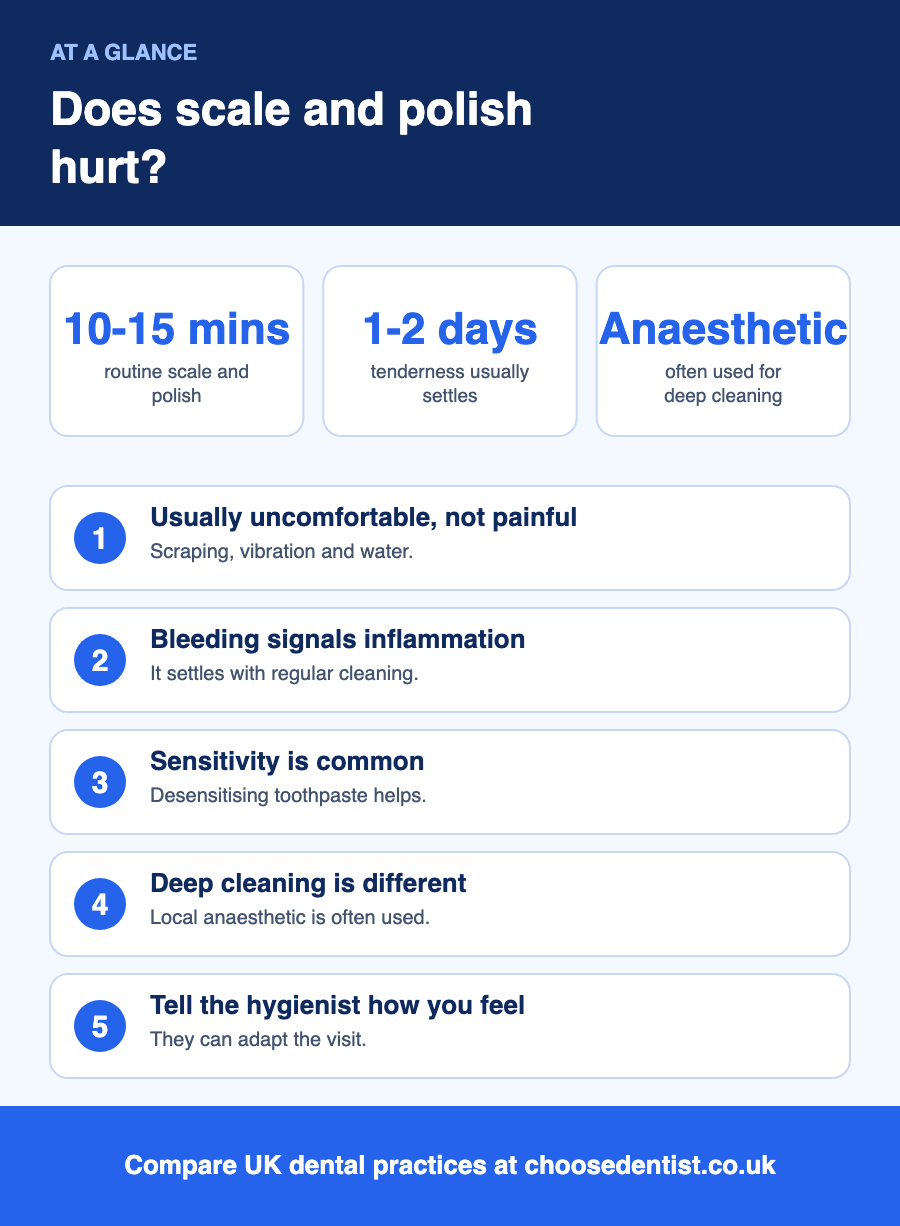
For most people a scale and polish is not painful, but it can be uncomfortable, particularly if the gums are inflamed or the teeth are sensitive. The sensation is usually scraping, vibration and some pressure, with water spraying and a gritty polishing paste at the end. Mild tenderness and a little bleeding are common when plaque and tartar have built up, and both usually settle within a day or two once the gums are clean.
Understanding what is happening, and telling the dental hygienist how you feel, makes a big difference. Hygienists are used to anxious and sensitive patients, and there are several ways of making the visit more comfortable.
What a scale and polish is
The NHS Business Services Authority describes how a scale and polish forms part of NHS treatment when it is clinically needed, as explained on its page about the band for a scale and polish. It removes the plaque and the hard deposits called tartar or calculus that form on the teeth, some of them below the gum line, and the teeth are then polished.
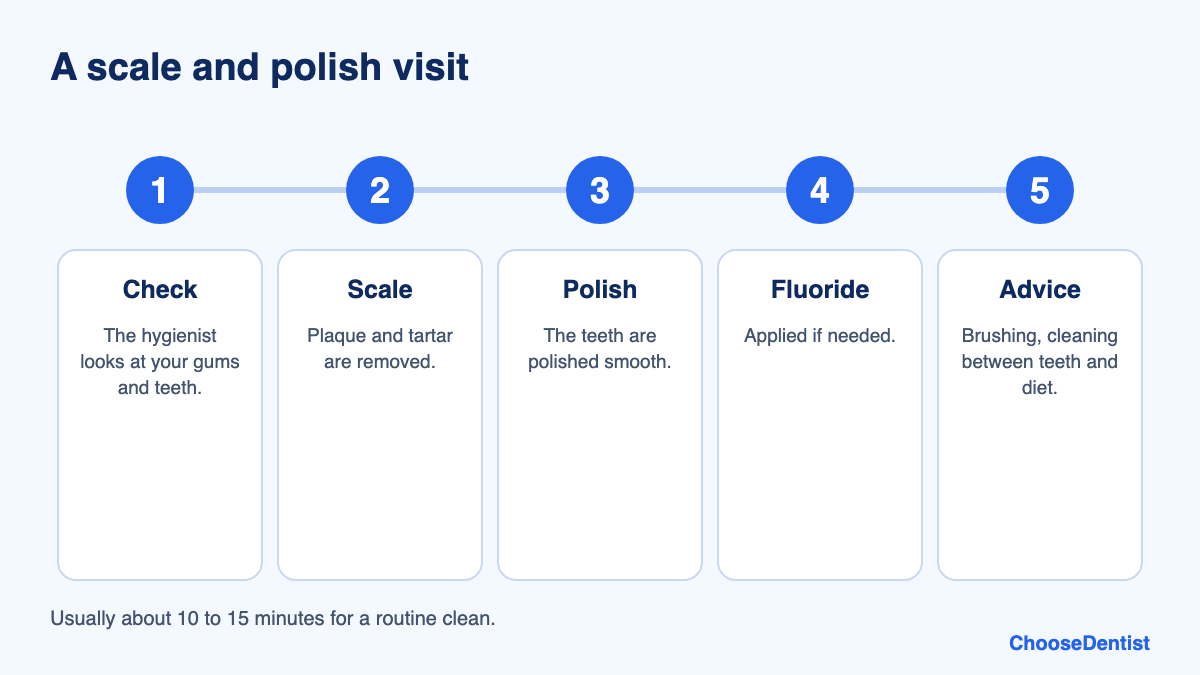
The Dorset County Hospital leaflet on visiting the hygienist says that a scale and polish usually takes about ten to fifteen minutes and goes alongside advice on brushing, cleaning between the teeth, diet and fluoride. It describes the aim as helping you to keep your mouth healthy, and the visit is meant to be educational as well as a clean.
| What you may feel | Why it happens | What helps |
|---|---|---|
| Scraping, vibration and water spray | Instruments and the ultrasonic scaler remove tartar | Usually mild; ask for lukewarm water |
| Tender or bleeding gums | Inflamed gums bleed easily | Thorough home cleaning; settles in days |
| Sharp twinges on cold | Exposed roots and thin enamel | Desensitising toothpaste or gel |
| Soreness after deep cleaning | Root cleaning under the gums | Local anaesthetic; painkillers; settles in days |
Why it can be uncomfortable
Discomfort comes from several sources. Tartar that has built up around the gum line has to be removed with an ultrasonic scaler, which vibrates and sprays water, or with hand instruments, and the gums around it may be tender. Inflamed gums bleed easily and react to touch, and teeth with exposed roots or thin enamel can feel sharp twinges from the cool water and the vibration.
The NHS describes gum disease as causing gums that are red, swollen and sore and that bleed when brushing or eating hard foods, which is why a mouth with gum disease is more sensitive to cleaning. The longer it has been since the last visit, the more tartar there tends to be and the more the gums may protest.
Why gums bleed
Bleeding is a sign of inflammation, not of damage done by the hygienist. When plaque sits against the gum, the tissue swells and its blood vessels become fragile, so even gentle contact makes it bleed. The NHS lists bleeding gums when brushing, flossing or eating hard foods as the first symptom of gum disease and advises improved cleaning, including interdental brushes, and a hygienist clean in the early stages, as set out on its page about gum disease.
Most people find that bleeding lessens within a week or two of regular, thorough cleaning at home, and that the next hygiene visit is more comfortable as a result.
Sensitive teeth
Sensitivity is common after a scale and polish, especially where gums have receded and roots are exposed. Removing tartar uncovers areas that were previously protected, and teeth may feel sensitive to cold air and drinks for a day or two. Desensitising toothpaste used twice a day, and avoiding very cold or hot drinks for a short time, usually helps.
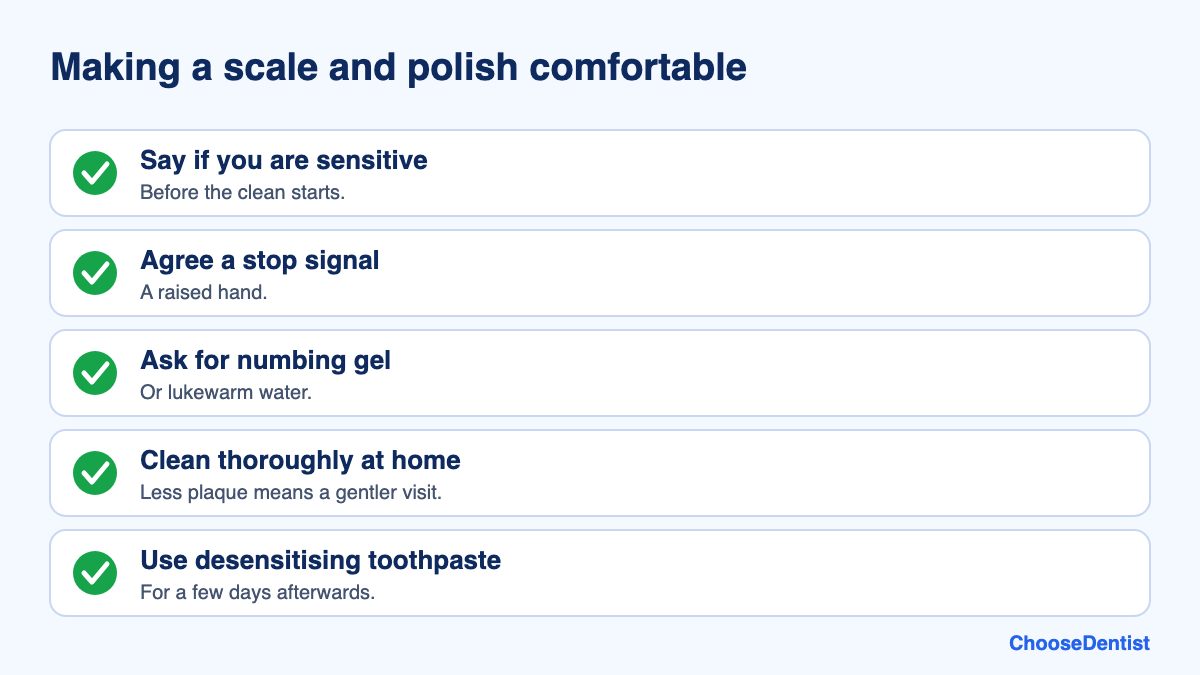
If a patient knows their teeth are sensitive, they should say so at the start. The hygienist can use lukewarm water, work more gently, apply a desensitising agent or numbing gel, or break the visit into shorter sessions.
Deep cleaning is different
A routine scale and polish is quite different from the deep cleaning used to treat gum disease. The NHS says that in serious cases treatment may include deep cleaning under the gums, and because this involves cleaning the root surfaces, local anaesthetic is often used so that it is not painful. Patients can expect some tenderness for a few days afterwards, and the gums can feel sore and look swollen.
A patient who is told they need deep cleaning should ask how it will be carried out, whether the area will be numbed and how many visits it will take.
Making it more comfortable
There are practical steps. Telling the hygienist at the start about sensitivity or nerves allows them to adapt, and agreeing a signal, such as raising a hand, gives a sense of control. Asking for topical numbing gel, breaks, or a shorter visit also helps. Having regular visits keeps the build-up small, and brushing and cleaning between the teeth carefully in the days beforehand reduces the amount of plaque to remove, although it is better to attend as you are than to cancel.
Anxious patients can ask about longer appointments, calming music or a relaxed first visit with no cleaning at all. Our guide to dental phobia explains the wider options for those with significant fear.
After the visit
Most people feel normal within hours. The gums may look slightly pink or feel tender for a day or two, and sensitivity to cold can come and go over a few days. Gentle brushing with a soft brush, avoiding very hot or cold drinks and using a desensitising toothpaste usually settles it. If pain is severe, the gums swell significantly or bleeding does not stop, contact the practice, because persistent problems need examining.
What a hygienist notices
A hygienist often spots things that patients do not. Pockets deepening around a tooth, receding gums, a rough edge on a filling, stained or worn areas and early signs of decay can all show up during a clean, and they will tell the dentist where needed. The visit therefore does more than clean: it works as an early warning, which is another reason to have one even if it is slightly uncomfortable.
NHS and private options across the UK
A scale and polish is part of NHS dental care where it is clinically needed, in the lowest charge band in England according to the NHS Business Services Authority. Charging for NHS dentistry differs across the four nations. England has three bands and an urgent charge, Wales numbered bands and an urgent charge with a contract reform under way, Scotland free examinations and free treatment under 26 with a capped share of the cost for other adults, and Northern Ireland a percentage of the dentist’s fee up to a ceiling per course. Not every NHS practice has a hygienist, so it is worth asking whether the visit would be with a dentist or a hygienist and whether it would be NHS or private.
Private hygiene appointments commonly cost from about £50 to £100, and longer or more intensive sessions cost more. A private practice may offer extra comfort measures, longer appointments and a hygienist who sees patients at set times.
Looking after your gums afterwards
After a visit, it helps to continue gentle but thorough cleaning even if the gums feel tender. Salt-water rinses can soothe, and painkillers are rarely needed. The Dorset leaflet recommends brushing at least twice a day with fluoride toothpaste, not rinsing afterwards and using a fluoride mouthwash at a different time of day.
The ChooseDentist directory of hygiene practices can be searched by postcode, with CQC and Google ratings shown where available. Two practices can be compared side by side, and details of hygienist appointments should be confirmed directly with the practice.