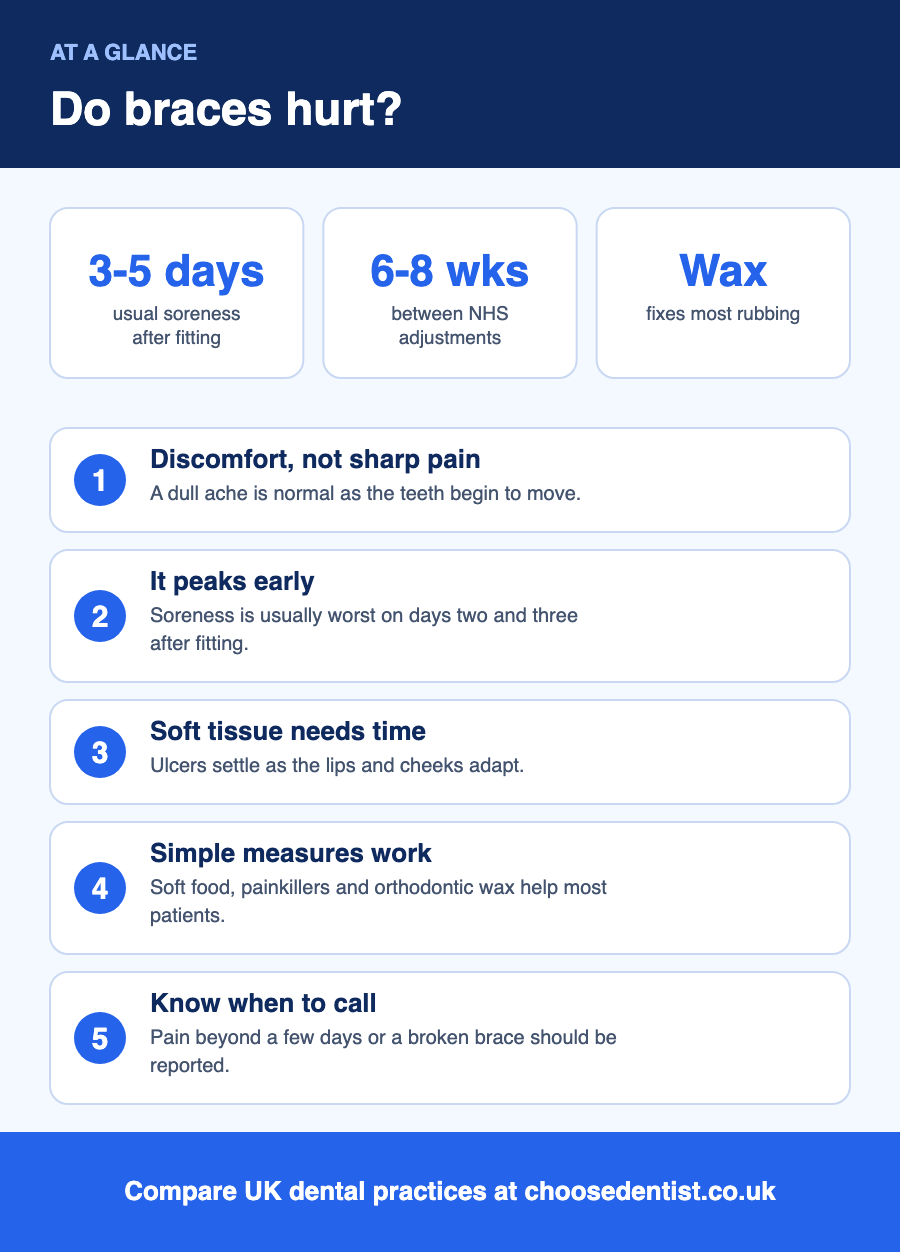
Braces cause discomfort rather than pain for most patients, and the sensation tends to be a dull ache or a general tenderness of the teeth rather than anything sharp. It usually begins a few hours after the brace is fitted or tightened, is at its worst on the second day or so, and eases within a few days. The experience is rarely severe, but it is common enough that anyone about to start braces should know what to expect.
The reason is mechanical. A brace applies light, continuous pressure to move a tooth, and the tissue around the root responds by remodelling, which temporarily makes the tooth sensitive to biting. Soreness is a sign of the appliance doing its job, and it is not an indication that something has gone wrong, although there are exceptions that are discussed below.
What the discomfort feels like
According to the NHS website, teeth may be sore for a few days after the brace is fitted or adjusted, and soft food and painkillers can help. Most patients describe the first few days as the hardest: chewing firm foods is uncomfortable, and teeth may feel loose or slightly raised. Adjustment visits, which take place every six to eight weeks on the NHS and every four to ten weeks across the wider range of treatments, are generally followed by a milder version of the same ache.
Brackets and wires bring a second kind of discomfort, in the soft tissue. The lips and cheeks have to get used to the hardware, and small ulcers and sore patches are common in the first fortnight. They usually settle as the mouth toughens up, and orthodontic wax pressed over the offending bracket gives immediate relief.
| Stage | What you may notice | What helps |
|---|---|---|
| First fitting | Aching teeth and sore lips for 3 to 5 days | Soft food, painkillers, orthodontic wax |
| Each adjustment | A milder ache lasting a day or two | Painkillers before the evening, cool drinks |
| First two weeks | Small ulcers where brackets rub | Wax, warm salt-water rinses |
| Elastics or new wires | Tenderness returns for a short time | Soft diet and gentle brushing |
| Removal and retainers | Mild tightness with a new retainer | Wear it as advised and the feeling passes |
How long the soreness lasts
For most people the worst of the soreness passes within three to five days. Some report that the pain after the first fitting is noticeably stronger than what follows later, partly because the mouth is adjusting to something entirely new. Different appliances feel different: lighter wires used in the early stages tend to produce gentler aches, while stronger wires and elastic bands that pull the teeth together can bring back tenderness. Lingual braces, which sit behind the teeth, often irritate the tongue for longer, and removable aligners give a feeling of tightness each time a new tray is started.
Pain thresholds vary, and so does tolerance. The Wikipedia article on orthodontics notes that several methods have been tried to reduce orthodontic pain, including low-level laser therapy and vibrating devices, but concludes that the evidence behind them is of low quality. Simple measures remain the mainstay.

Different appliances, different sensations
The type of brace affects what is felt. Traditional metal brackets are small and smooth but can catch the lips. Ceramic brackets are slightly larger and may rub a little more. Lingual braces sit on the inside surfaces of the teeth, where the tongue is in constant contact, so patients commonly notice a lisp and tongue soreness for the first couple of weeks. Clear aligners tend to produce a feeling of pressure across all the teeth for a day or two when a new tray is begun, but without brackets there is little to rub against the cheeks. Appliances such as palatal expanders or elastics that connect the upper and lower teeth can add their own ache and are usually accompanied by specific advice from the orthodontist.
Ways to ease the discomfort
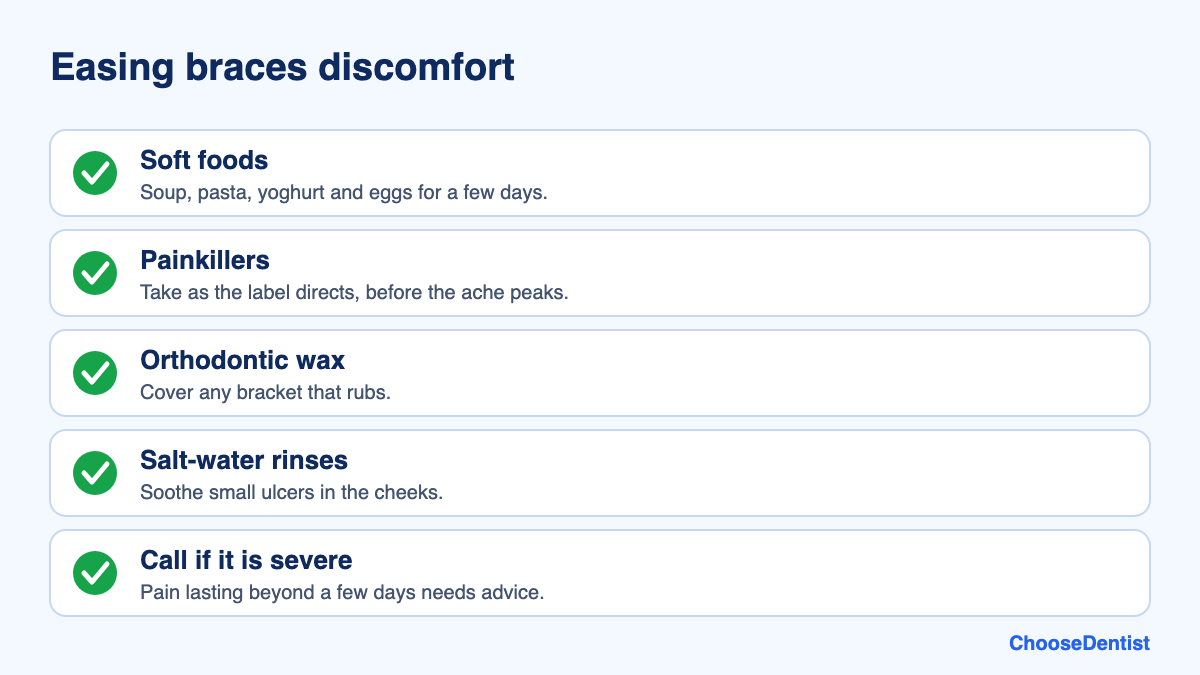
Over-the-counter painkillers, taken as the label directs, are the usual first step, and many orthodontists suggest taking a dose shortly before an appointment or in the evening after a tightening so that the worst of the ache is covered. Soft foods such as soup, pasta, yoghurt and scrambled eggs reduce the need to bite hard, and cold drinks or a cool compress can soothe tender gums.
A rinse with warm salt water several times a day helps small mouth ulcers, and orthodontic wax is the best answer to a bracket that rubs. It should be replaced after meals. Brushing remains important during this time, since an unclean mouth makes the gums more sensitive, and a soft toothbrush with a small head reaches around the brackets without causing extra irritation.
Eating and drinking with braces
Food becomes a practical issue. Hard and sticky items, such as toffee, nuts, crusty bread and whole apples, can bend wires or dislodge brackets, which in turn means an extra appointment and sometimes a longer course of treatment. Cutting food into small pieces, chewing with the back teeth and avoiding fizzy and sugary drinks between meals are sensible habits. The NHS also notes the importance of cleaning carefully, because plaque trapped around brackets can lead to decay and to white marks that remain after the brace is removed.
Does age make a difference?
There is no firm rule about whether children, teenagers or adults feel more discomfort, and individual variation is considerable. Younger patients often adapt quickly to the hardware, and many shrug off the aches that adults find tiresome, but this is a generalisation, and plenty of teenagers find the first week hard. Some adults report that their teeth feel tender for slightly longer, though how much anyone feels depends on many things besides age. Whatever the age, prompt painkillers and a soft diet make the early days easier.
When to contact the orthodontist
The NHS advises getting in touch if pain lasts for more than a few days, if the gums become very red or swollen, or if part of the brace breaks. A wire that has slipped and is digging into the cheek can be dealt with by the patient at home in an emergency, perhaps by covering it with wax, but it should be reported so that it can be repaired. A bracket that has come away from a tooth is not dangerous in itself, though treatment will stall until it is refitted, so a prompt call is worthwhile.
Severe pain, swelling that spreads across the face, a high temperature or a loose tooth that moves a great deal are not part of normal treatment and need to be seen quickly.
NHS and private treatment across the UK
The experience of a brace is much the same whether treatment is NHS or private, but access differs. In England the NHS offers braces mainly to people under 18 with a clinical need, and adults will usually pay privately. Scotland, Wales and Northern Ireland also concentrate NHS orthodontics on young people with a recognised need, and each has its own charging system: Scotland offers free NHS treatment for those under 26, Wales uses banded charges with children exempt, and Northern Ireland asks adults to pay a percentage of the fee up to a limit.
Where braces are provided privately, fees commonly range from about £2,000 to £5,000, and what is included varies. It is worth asking whether emergency appointments, repairs and retainers are covered in the price, because a practice that makes it easy to be seen quickly when a bracket breaks will make a real difference to how comfortable the treatment feels.
Choosing a practice with good support
Because discomfort tends to cluster around fitting and adjustment visits, the way a practice supports its patients matters. Helpful features include clear aftercare advice, a way of reaching someone between appointments and a willingness to see patients quickly when a wire causes trouble.
The ChooseDentist directory of orthodontic practices allows visitors to search by postcode and compare two practices side by side, including CQC and Google ratings where available, and patient comments on those ratings often reveal how a team deals with problems. Appointment times and costs should be confirmed directly with the practice.