Can I Drive After Dental Sedation?

Cover image for: Can I Drive After Dental Sedation?

After oral or intravenous dental sedation, patients should not drive, and the usual advice is to avoid driving, cycling, using machinery and drinking alcohol until the following day. For inhalation sedation, with laughing gas, recovery is much faster, and many patients can leave unaccompanied after a short rest, though practices differ and the dentist’s own … Read more

What Is Dental Phobia and How Is It Treated?

Cover image for: What Is Dental Phobia and How Is It Treated?

Dental phobia is an intense, persistent fear of dental treatment that leads people to avoid the dentist, often until pain forces them to seek emergency care. It is more than ordinary nervousness: sufferers may feel panic, nausea or a racing heart at the thought of an appointment. It is common, and it can be treated … Read more

What Is Inhalation Sedation (Laughing Gas)?

Cover image for: What Is Inhalation Sedation (Laughing Gas)?

Inhalation sedation is a way of helping nervous patients relax during dental treatment by breathing a mixture of nitrous oxide and oxygen through a small mask placed over the nose. It is often called laughing gas, though most people do not laugh, and it produces a calm, slightly detached feeling within a few minutes. It … Read more

Can Children Have Dental Sedation?

Cover image for: Can Children Have Dental Sedation?

Yes, in some circumstances. Sedation can help a child who is too anxious, too young or too distressed to cope with a necessary procedure, and it is used by dentists with suitable training. It is not a routine part of children’s dentistry, though, and most children never need it, because gentle behaviour management, careful explanation … Read more

How Does Oral Sedation Work at the Dentist?

Cover image for: How Does Oral Sedation Work at the Dentist?

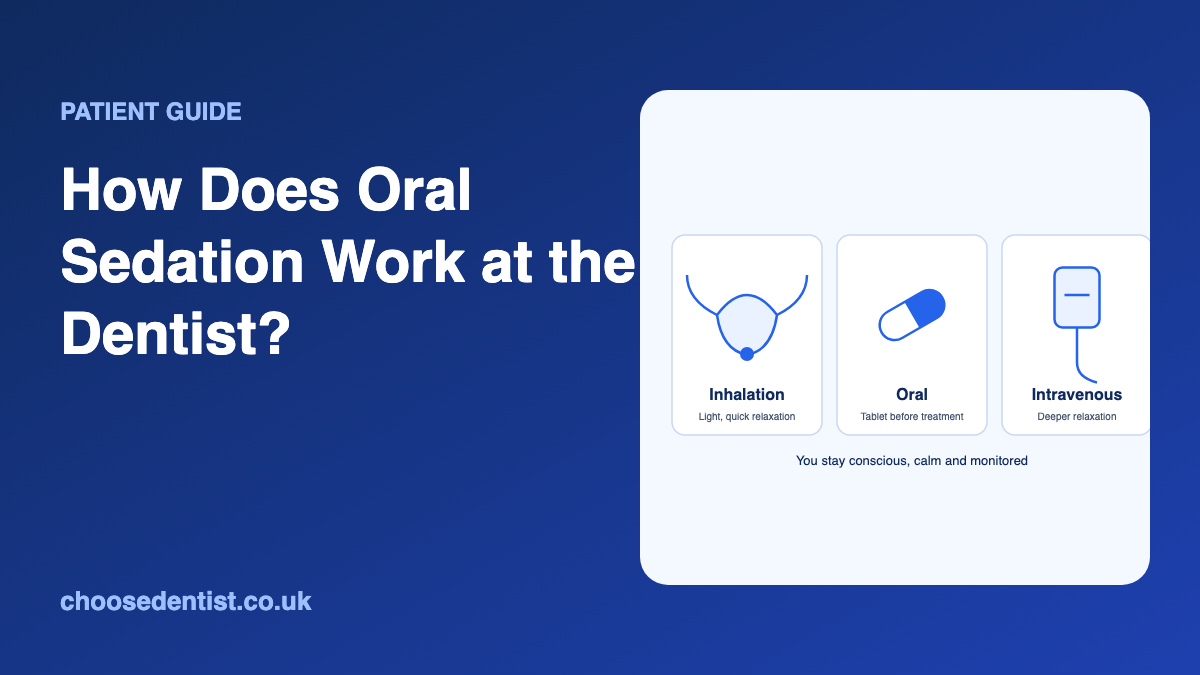
Oral sedation involves taking a sedative medicine, as a tablet or liquid, shortly before dental treatment so that the patient arrives and remains calm and relaxed. It takes effect more slowly than inhalation or intravenous sedation and the dose cannot be adjusted once it has been given, but it is simple to administer and avoids … Read more

Will I Be Asleep During Dental Sedation?

Cover image for: Will I Be Asleep During Dental Sedation?

In most cases, no. Dental sedation is intended to leave a patient deeply relaxed but still conscious and able to respond to the dental team, which is why it is usually called conscious sedation. Some people drift in and out of light sleep and remember little afterwards, particularly with intravenous sedation, but that is a … Read more

Is Dental Sedation Safe?

Cover image for: Is Dental Sedation Safe?

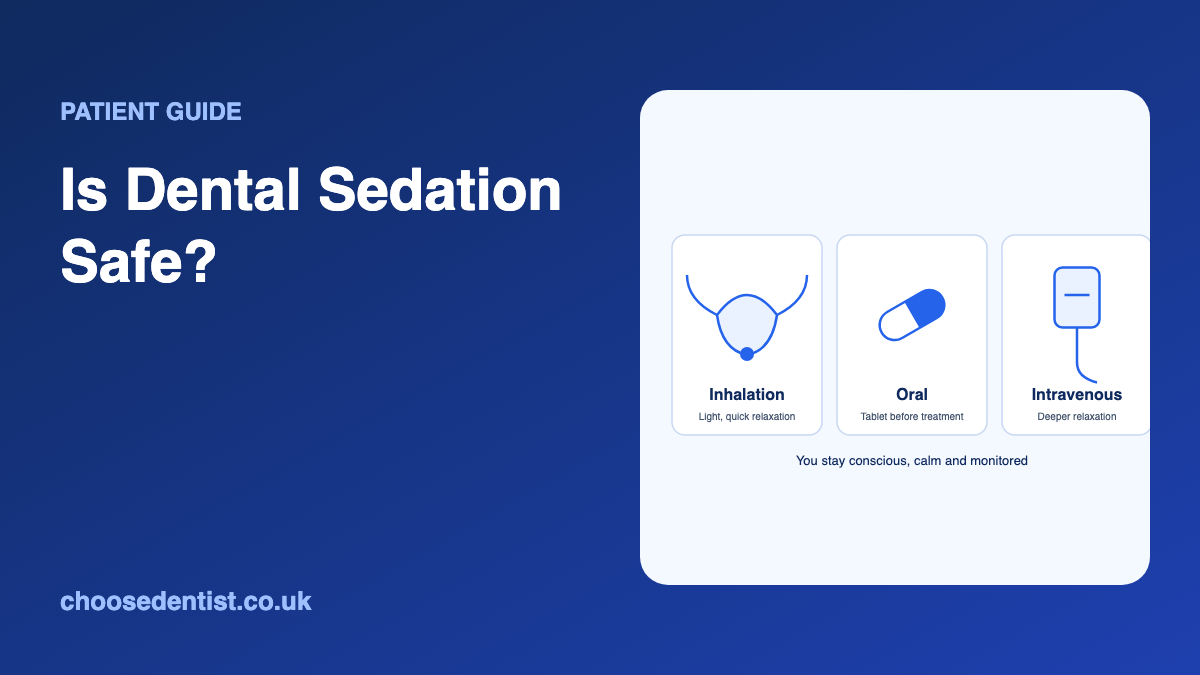
Dental sedation has a good safety record when it is provided by properly trained clinicians to patients who have been assessed beforehand, but no sedation is risk-free. The medicines used act on the central nervous system and can affect breathing and blood pressure, so safety depends less on the drug itself than on who gives … Read more

What Is IV Sedation at the Dentist?

Cover image for: What Is IV Sedation at the Dentist?

Intravenous sedation, or IV sedation, is a form of conscious sedation in which a sedative medicine is injected through a small needle into a vein in the hand or arm. It produces a deeper level of relaxation than inhalation sedation, usually leaves patients with little memory of the treatment and can be adjusted during the … Read more