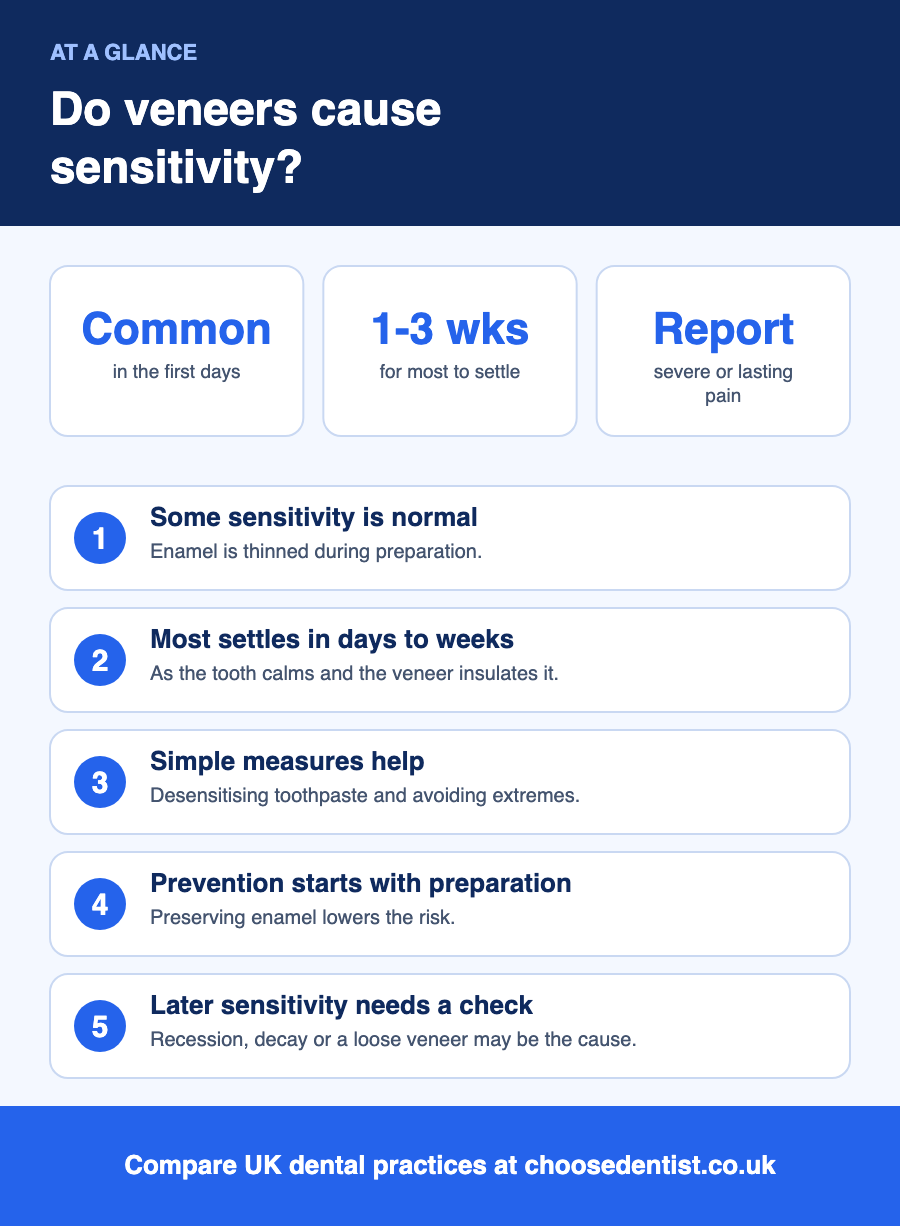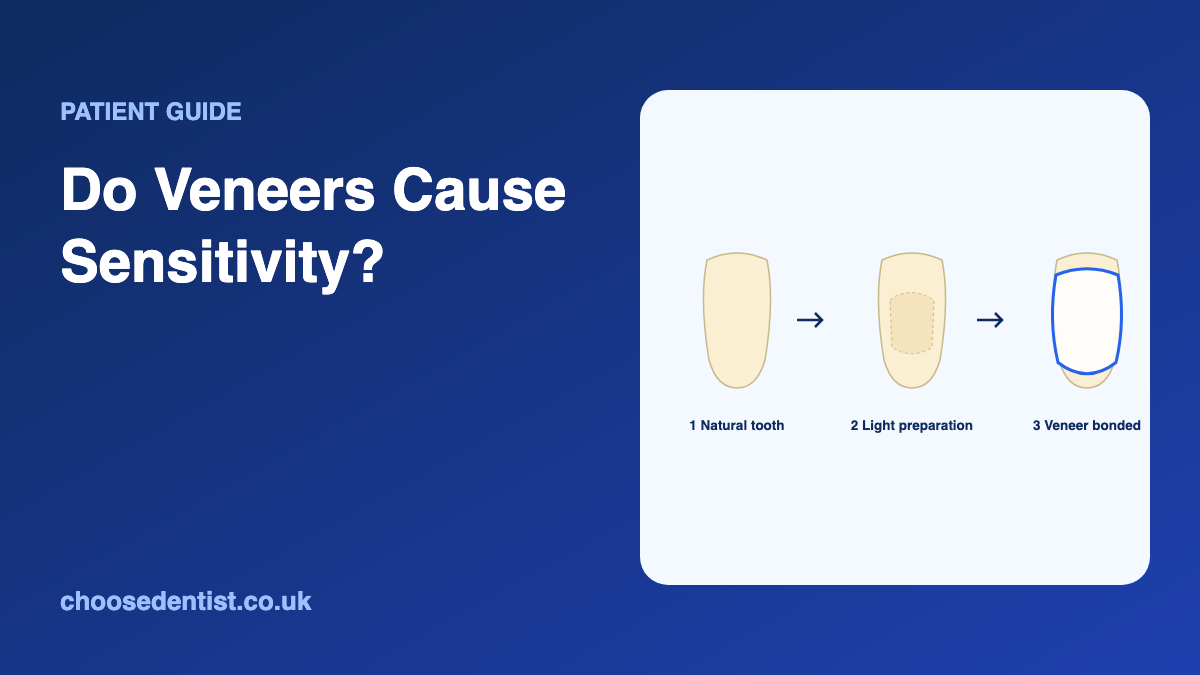
Some sensitivity is common after dental veneers are fitted, particularly to cold air and drinks, and it usually settles within a few days to a few weeks. It happens because preparing the tooth removes a thin layer of protective enamel and the tooth responds to the procedure, and in most cases it is mild and temporary. Persistent or severe sensitivity is a different matter and deserves a check.
The Wikipedia article on dental veneers makes the point plainly: sensitivity and decay can be a problem even if the procedure is properly performed. Knowing what is normal, what helps and what warrants a call to the dentist allows patients to manage the early weeks calmly.
Why sensitivity occurs
Enamel acts as an insulating layer over the dentine, which contains microscopic channels leading to the nerve. When a veneer is prepared, a thin layer of enamel is removed, and the dentine may be closer to the surface or even partly exposed, so temperature changes reach the nerve more easily. The tooth may also be irritated by the preparation itself, by the temporary veneers or by the bonding materials.
The Oral Health Foundation notes in its guide to veneers that a small amount of enamel is removed from the front of the tooth, which is the source of the extra sensitivity. The amount varies with the case, and teeth prepared more conservatively, or fitted with no-prep veneers, are less likely to react.
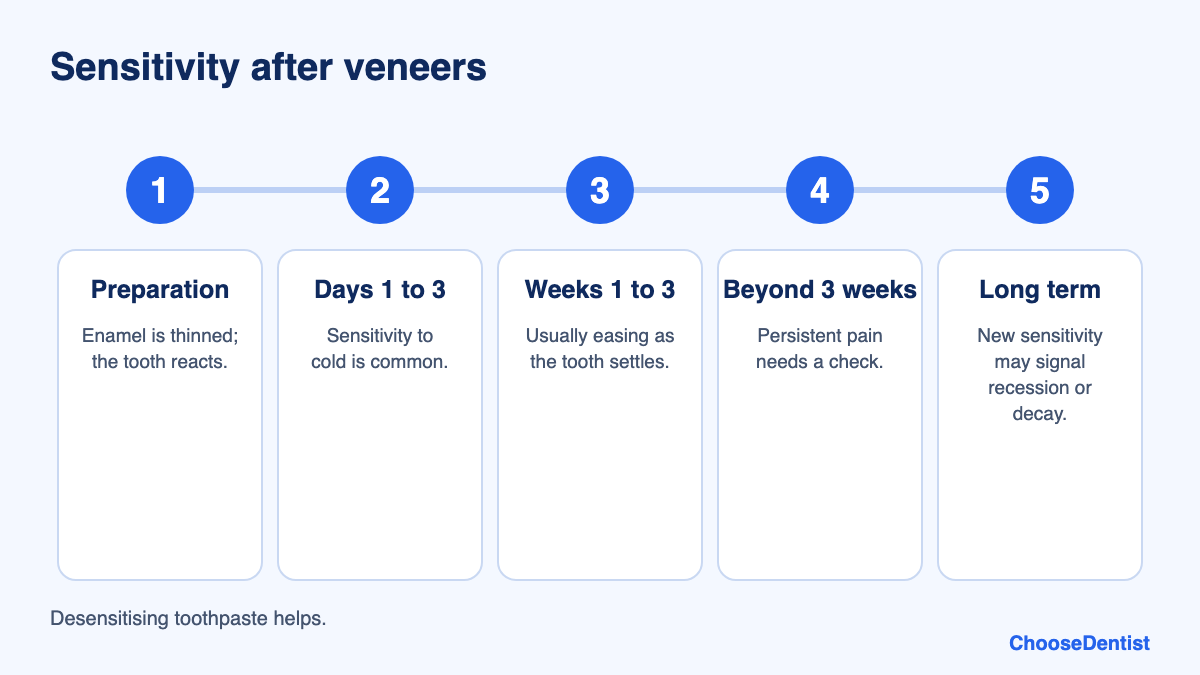
| Timing | What you may notice | What helps |
|---|---|---|
| First days after preparation | Sensitivity to cold air and drinks | Desensitising toothpaste; avoid extremes of temperature |
| 1 to 3 weeks | Gradual easing | Soft brush, fluoride toothpaste, a review visit |
| Beyond a few weeks | Persistent or throbbing sensitivity | See the dentist; it may need further treatment |
| Months or years later | New sensitivity | Check for recession, decay or a loose veneer |
How long it lasts
The first few days are usually the most noticeable, with a gradual improvement over one to three weeks. In most patients the nerve calms and the sensitivity disappears completely as the dentine seals itself and the bonded veneer insulates the tooth. A small number notice mild sensitivity to cold for longer, particularly on teeth that were more heavily prepared.
If sensitivity is getting worse, is severe, is triggered by heat or lingers after the stimulus has gone, or is accompanied by throbbing pain or swelling, it should be reported to the dentist promptly, as it may point to inflammation of the nerve and need further treatment.
What helps
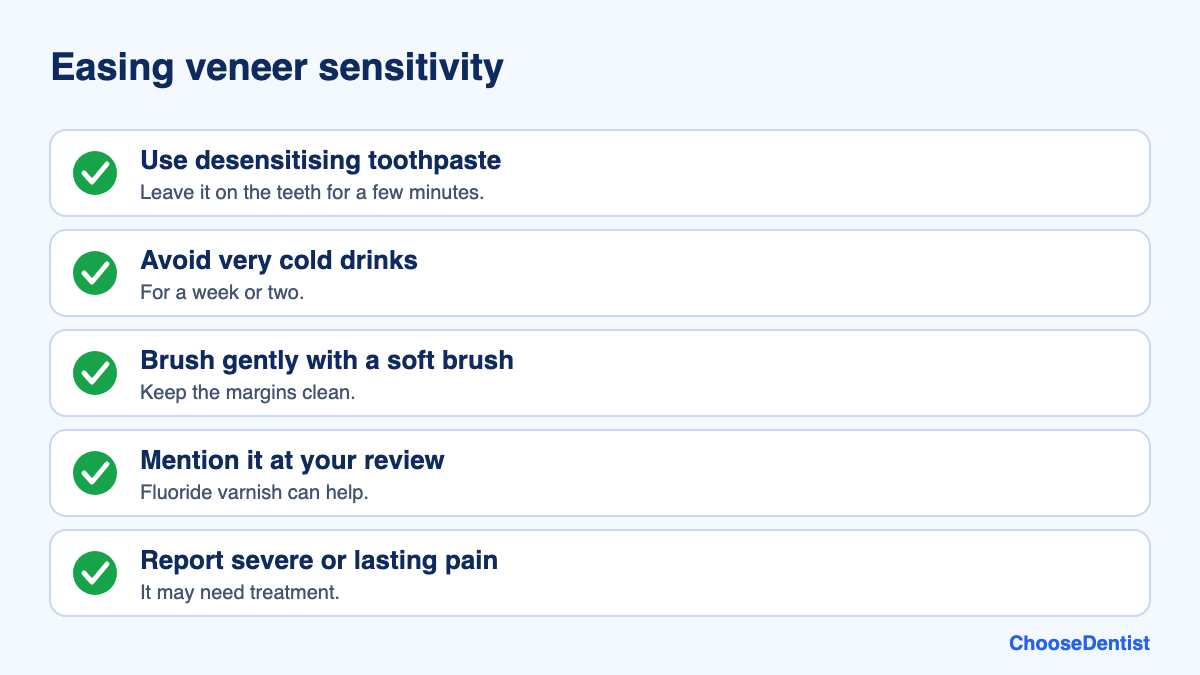
Several simple steps can ease discomfort. Using a desensitising toothpaste, spread on the teeth and left on for a few minutes, can reduce symptoms over a couple of weeks. Avoiding very cold drinks and ice cream, sipping through a straw and breathing through the nose in cold air all help, and over-the-counter painkillers are suitable if needed, following the instructions on the pack.
The dentist can apply a desensitising agent or fluoride varnish at a review visit. Keeping the teeth clean with a soft brush and fluoride toothpaste is important, because plaque around the margins can aggravate symptoms.
Reducing the risk
The dentist can reduce the chance of sensitivity by preserving as much enamel as possible, working carefully, protecting the prepared teeth with well-fitting temporary veneers and sealing the exposed dentine before bonding. Patients can help by treating gum recession and decay first, and by telling the dentist if their teeth are already sensitive, because they may be better suited to a minimal-preparation or composite option.
Sensitivity that appears later
Sensitivity that begins months or years after veneers were fitted needs separate consideration. It may be caused by gum recession exposing the root surface, decay at the margin of a veneer, a veneer that has become loose or a crack, or grinding that irritates the tooth. A dentist can examine the tooth, take an X-ray and identify the cause, and treatment may involve cleaning, a filling, re-bonding or in some cases replacement of the veneer.
Patients who grind their teeth may be advised to wear a night guard, which protects both the veneers and the teeth beneath.
Other discomfort
Gum tenderness around the veneered teeth is also common for a few days, and the bite may feel different until the teeth settle. A high spot on a veneer can cause discomfort when biting and is easily corrected by the dentist. These should be mentioned at the review visit, not tolerated.
Veneers and existing sensitivity
Patients who already have sensitive teeth should mention it at the consultation, because it can influence the choice of treatment. Sensitivity may come from worn enamel, exposed roots or gum recession, and these may be treated first with desensitising products or a small filling. A conservative approach, such as composite or a minimal-preparation veneer, may reduce the chance of making it worse, and the dentist can explain the trade-offs.
What the dentist can do
If sensitivity persists, the dentist has several options. A desensitising varnish or gel can be applied in the surgery, the bite can be adjusted if a veneer is high, and a poorly sealed margin can be corrected. In the rare case that the nerve of the tooth has been irritated beyond recovery, a root canal treatment may be needed, and the veneer can usually be preserved by treating through the back of the tooth. Early review keeps these procedures simple.
When to seek urgent advice
Severe, throbbing pain, swelling of the gum or face, a bad taste or a high temperature after veneers are fitted should be treated as urgent and reported at once. Such symptoms may point to infection, and the NHS advises seeing a dentist urgently or calling NHS 111 where an abscess is suspected. Outside surgery hours, the practice’s answerphone usually gives instructions, and the NHS 111 service can direct patients to emergency dental care.
Veneers and gum recession
Receding gums can expose the root surface at the edge of a veneer, and because roots lack enamel they are very sensitive to cold and brushing. Gentle brushing technique, a soft brush and desensitising toothpaste help, and the dentist can apply a protective varnish or, in some cases, a small bonded repair. Gum disease should be controlled, since inflamed gums recede more readily, and smokers are advised to stop, since smoking worsens gum health and slows healing.
Temperature changes and daily habits
Day-to-day habits can aggravate or ease sensitivity. Very cold or very hot drinks, acidic foods and fizzy drinks are common triggers in the early weeks, and drinking them through a straw or at a moderate temperature reduces the contact with the teeth. Brushing too hard or immediately after acidic food can wear the surface, so waiting half an hour and using light pressure is better. Mouthwashes that contain strong alcohol may also sting, and a fluoride rinse used at a different time from brushing offers extra protection.
NHS and private options across the UK
Cosmetic veneers are private, and aftercare is normally provided by the practice that fitted them. The NHS says that veneers are generally private unless there is a clinical need, as its page on dental treatments explains. An NHS dentist can examine and treat any dental problem that arises from sensitivity, for example decay beneath a veneer, as part of ordinary NHS care, though the veneer itself would be a private matter. Charging for NHS dentistry differs across the four nations. England has three bands and an urgent charge, Wales numbered bands and an urgent charge with a contract reform under way, Scotland free examinations and free treatment under 26 with a capped share of the cost for other adults, and Northern Ireland a percentage of the dentist’s fee up to a ceiling.
Choosing a practice
A practice that explains the risk of sensitivity, offers a review after fitting and is easy to contact if problems arise gives patients more confidence. Asking what the policy is on sensitivity and re-bonding is sensible before treatment.
The ChooseDentist directory of veneer practices can be searched by postcode, with CQC and Google ratings displayed where available. Two practices can be compared side by side, and the details of aftercare should be confirmed directly with the practice.