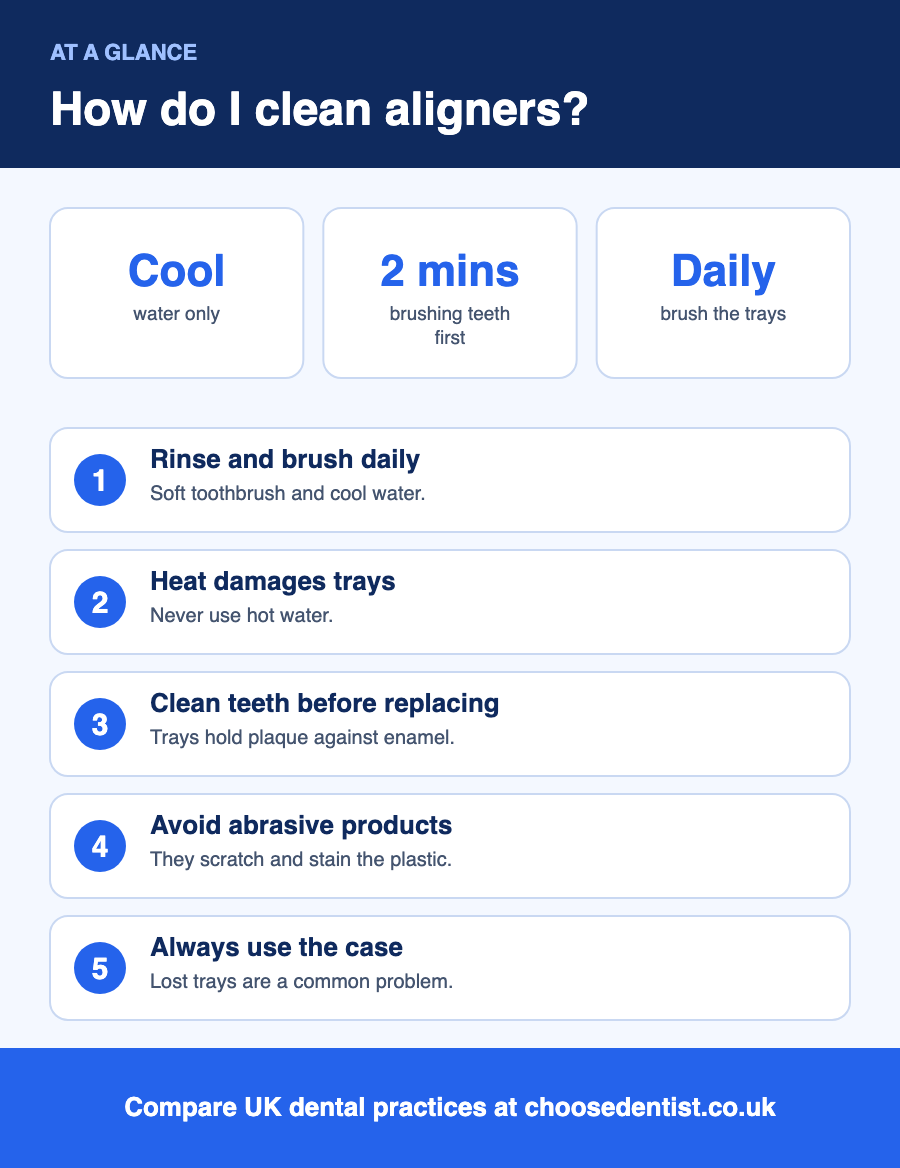
Clear aligners should be rinsed and brushed gently every day with cool water and a soft toothbrush, and removed for eating and for drinking anything other than water. That simple routine keeps the trays clear, prevents odour and protects the teeth underneath, which sit behind plastic for much of the day. A few common habits, such as using hot water or abrasive toothpaste, do real harm, so it is worth knowing what to avoid.
Looking after clear aligners is closely tied to looking after the teeth. Because the trays hold anything that is on the teeth against the enamel, a clean mouth and clean aligners go together, and a short routine after every meal makes a considerable difference.
The daily routine
At the start and end of each day, and ideally whenever the trays are out, rinse them under cool running water to remove saliva and loose debris. Brush them gently with a soft toothbrush, using cool water and, if you wish, a small amount of clear liquid soap that has no colour or strong fragrance. Rinse thoroughly and put them back, or place them in their case.
The Wikipedia article on clear aligners says that aligners are removed for brushing, flossing and eating, and that hot drinks should be limited, since heat can warp the plastic and cause staining. It follows that the trays should never be cleaned or soaked in hot water.
| Do | Do not | Why |
|---|---|---|
| Rinse with cool water | Use hot or boiling water | Heat can warp the plastic |
| Brush gently with a soft brush | Use abrasive or whitening toothpaste | Scratches hold bacteria and stain |
| Clean your teeth before replacing trays | Wear trays over unbrushed teeth | Food and sugar are held against enamel |
| Store trays in their case | Wrap them in a napkin | They are easily thrown away |
| Use a cleaner made for aligners | Soak in bleach or strong mouthwash | They can damage or tint the plastic |
Cleaning your teeth first
The trays can only stay clean if the teeth do. After eating, brush the teeth, ideally with fluoride toothpaste for two minutes, and clean between them with floss or interdental brushes before the aligners go back in. The NHS advice on how to keep your teeth clean recommends brushing twice a day and cleaning between the teeth daily, and notes that you should spit out toothpaste instead of rinsing, because rinsing reduces the effect of the fluoride.
If you cannot brush straight away, rinse the mouth with water, and brush the teeth and trays at the first opportunity. Putting aligners over teeth that have just had a sugary drink and not been cleaned increases the risk of decay.
What to avoid
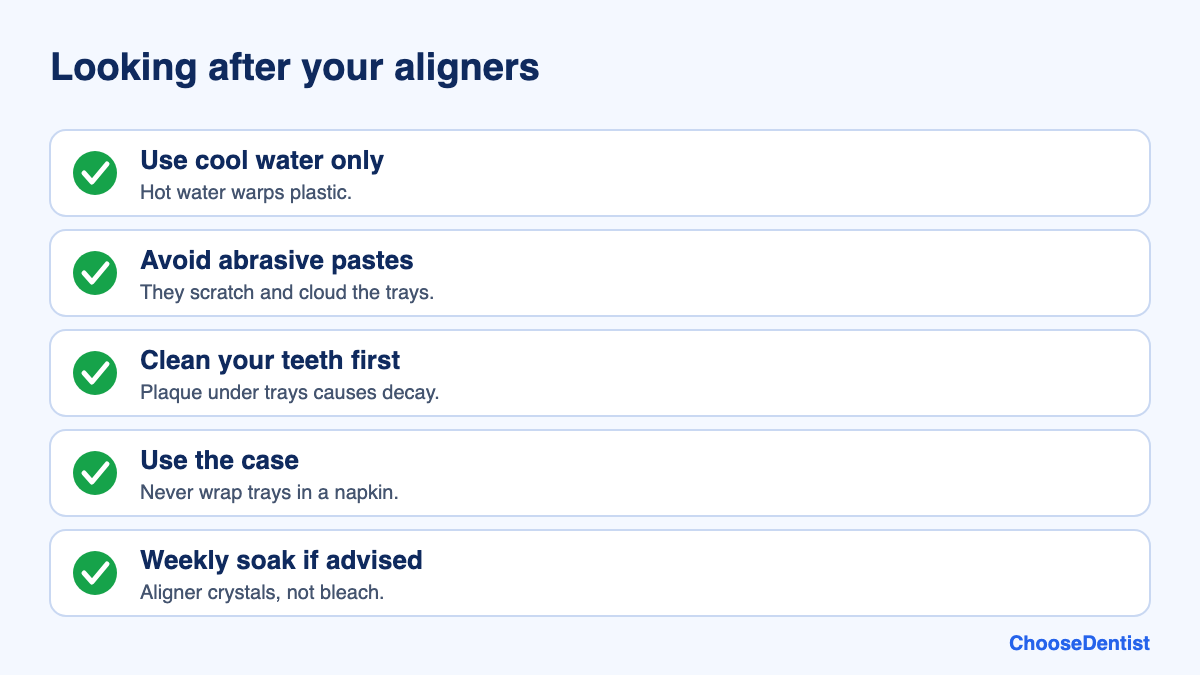
Several habits damage aligners. Hot water can bend the plastic and alter its fit, so cool or lukewarm water only. Abrasive toothpastes, including some whitening ones, scratch the surface and make it cloudy, and scratches hold bacteria and stain. Coloured or strongly flavoured mouthwashes can leave a tint, and so can some soaps.
Avoid chewing gum, eating or drinking anything but water with the aligners in and smoking while wearing them, since all can stain or damage the plastic. Never wrap trays in a napkin, because they are easily thrown away by mistake.

Deeper cleaning
Once or twice a week, many patients use a cleaning product designed for aligners, such as effervescent crystals, or a gentle soak following the practice’s instructions. These help to loosen build-up that brushing alone leaves behind. Products that are not intended for aligners, including denture tablets, should be used only if the dentist agrees, and bleach or mouthwash soaks should be avoided.
A weekly soak is not essential for everyone, but it is useful for removing a cloudy film and for keeping the trays fresh. Brushing remains the foundation.
Dealing with odour and stains
A smell usually signals a build-up of bacteria on the plastic or on the teeth. Better daily cleaning, thorough brushing of the tongue and teeth and a weekly soak normally clear it. Persistent bad breath may point to gum disease or decay, and a dentist can check.
Stains come from coloured drinks and foods, tobacco and some medicines. Taking the trays out for anything but water prevents most of them. Once a tray is badly stained, cleaning will not restore it completely, and because trays are replaced every week or two, the problem usually resolves itself with the next set.
Travelling and storage
Always keep the aligners in their case when they are out of the mouth. A spare toothbrush and a small travel kit with interdental brushes make it easy to clean the teeth after meals away from home. The case itself should be washed regularly, since it can harbour bacteria, and the trays should never be left on a hot surface or in a car in the sun.
Cleaning at school, work and on the move
Maintaining the routine away from home takes a little planning. A small kit containing a travel toothbrush, interdental brushes, toothpaste and the aligner case can live in a bag or desk drawer. After lunch, the trays are taken out, the teeth cleaned and the aligners rinsed and replaced. Where a washroom is not convenient, rinsing the mouth with water and brushing at the earliest opportunity is better than putting the trays straight back over unclean teeth.
Signs that a tray needs replacing
Even with good care, trays wear. Cracks, rough edges, persistent cloudiness, an unusual smell that does not clear or a change in fit are all signs that a tray may need replacing. A tray that no longer fits properly should not be forced, and the practice can advise whether to move back a stage or to order a replacement. Patients should keep their previous set as a spare, as many practices recommend.
Cleaning attachments and the teeth beneath
Attachments need a little extra attention. A soft brush angled at the gum line and around each bump removes plaque, and interdental brushes reach the spaces between the teeth. Water flossers can help with hard-to-reach areas. Keeping the teeth and attachments clean protects against white marks and decay, which are among the commonest problems associated with aligner treatment.
Cleaning when you are unwell or have a dry mouth
Illness, certain medicines and mouth-breathing can reduce saliva, which normally helps to wash and protect the teeth. When the mouth is dry, the trays can feel uncomfortable and bacteria multiply more quickly, so sipping water often, brushing a little more carefully and keeping the trays scrupulously clean help. Anyone with a persistently dry mouth should mention it to the dentist, who may suggest saliva substitutes or other measures.
NHS and private options across the UK
Aligner care instructions are given by the practice supplying the treatment, which will almost always be private, as clear aligners are not part of the standard NHS offer. The NHS says that braces on the NHS are usually fixed appliances for people under 18 with a clinical need, and that patients should clean carefully around them, and its page on braces outlines the position. Charging for NHS dentistry differs across the four nations. England has three bands and an urgent charge, Wales numbered bands and an urgent charge with a contract reform under way, Scotland free examinations and free treatment under 26 with a capped share of the cost for other adults, and Northern Ireland a percentage of the dentist’s fee up to a ceiling. Private fees for aligner treatment commonly range from about £2,500 to £5,500, and a replacement tray may or may not be included, which is worth checking in advance.
Getting help
A cracked, warped or lost aligner should be reported to the practice at once, since it may be possible to move back to a previous tray while a replacement is made. Persistent odour, soreness or a change in the fit are also reasons to call.
The ChooseDentist directory of practices offering clear aligners can be searched by postcode, with CQC and Google ratings displayed where available. Two practices can be compared side by side, and the details of aftercare and costs should be confirmed directly with the practice.