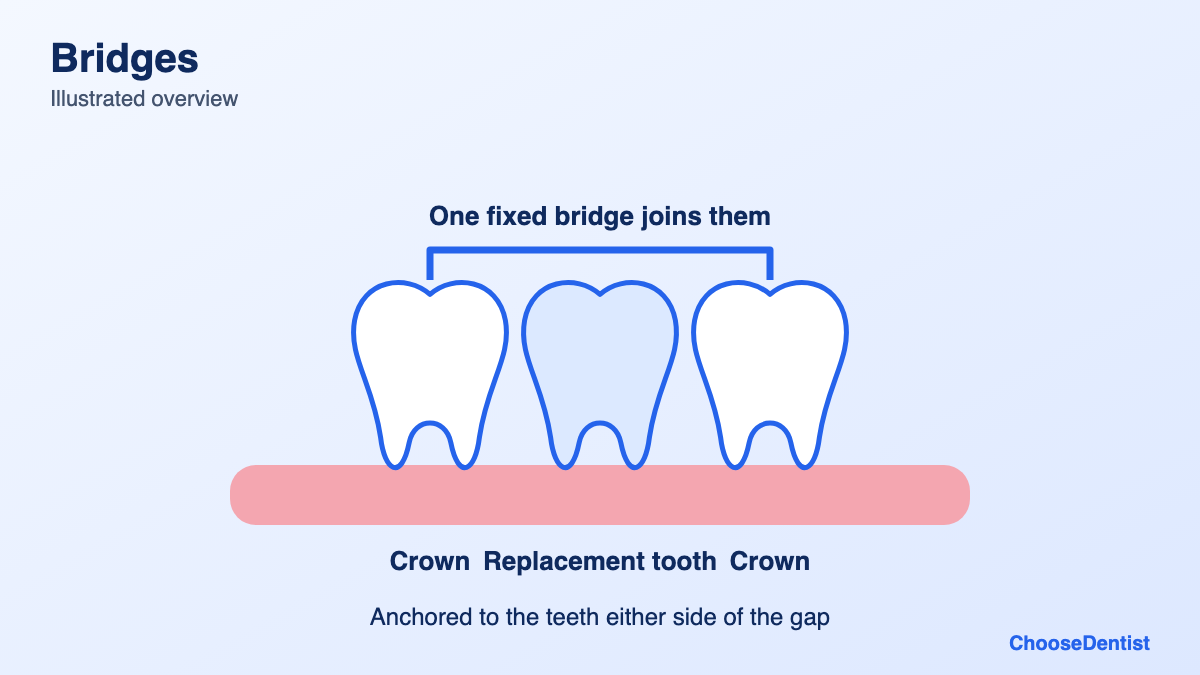
A dental bridge replaces one or more missing teeth by joining an artificial tooth to the natural teeth on either side of the gap. It is a long-established, fixed alternative to a denture or an implant, and when it is well made it can restore your bite and your smile for many years. This guide explains the types of bridge, what to be cautious about, and how to use ChooseDentist to compare practices that provide them.
Bridges explained in a minute
Prefer to watch? This short narrated video covers what the treatment involves, what to be careful about and how to compare practices. Turn the sound on for the voiceover, or follow the on-screen captions.
What is a dental bridge?
A traditional bridge has a replacement tooth, called a pontic, held between two crowns that are cemented onto the neighbouring teeth, which are known as abutments. A cantilever bridge is supported on one side only, and a resin-bonded or Maryland bridge uses small wings bonded to the backs of the adjacent teeth, so little or no tooth needs to be removed. The Wikipedia article on cosmetic dentistry notes that bridges require commitment to serious oral hygiene and carry risk, and that cantilever and Maryland bridges are less invasive but have a reputation for failure.
Bridges are suited to people who have healthy teeth either side of the gap and who prefer not to have implant surgery. Because the abutment teeth are usually reshaped to take crowns, they should be healthy and strong, and a dentist will assess the gums and bite before recommending one. The article puts the average life of a bridge at nearly ten years, similar to a crown, although many last far longer with good cleaning.
What happens when you have a bridge
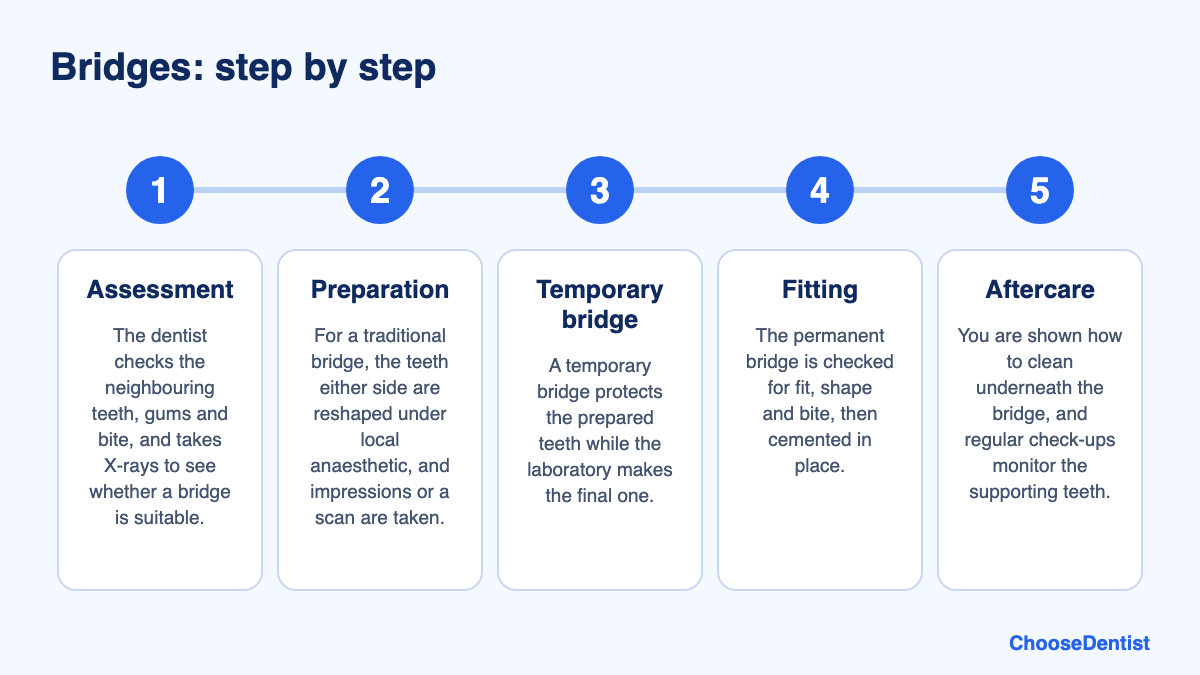
A traditional bridge usually takes two visits over a few weeks:
- Assessment. The dentist checks the neighbouring teeth, gums and bite, and takes X-rays to see whether a bridge is suitable.
- Preparation. For a traditional bridge, the teeth either side are reshaped under local anaesthetic, and impressions or a scan are taken.
- Temporary bridge. A temporary bridge protects the prepared teeth while the laboratory makes the final one.
- Fitting. The permanent bridge is checked for fit, shape and bite, then cemented in place.
- Aftercare. You are shown how to clean underneath the bridge, and regular check-ups monitor the supporting teeth.
Cost and NHS availability
Bridges are available on the NHS where they are clinically appropriate, and in England they fall in the highest charge band, alongside crowns and dentures. Private bridges are priced by the practice and commonly cost from about £500 to £1,000 or more per unit, so a three-unit bridge can cost from around £1,500 to £3,000, depending on the materials and region.
Implants are a longer-lasting alternative but are mostly private, and NHS charging differs across England, Scotland, Wales and Northern Ireland, so ask what applies where you live.
What to be cautious about when choosing a dentist for bridges
Not every practice offers the same standard of care, and the right choice depends on your needs. These are the points most worth checking before you commit to bridges:
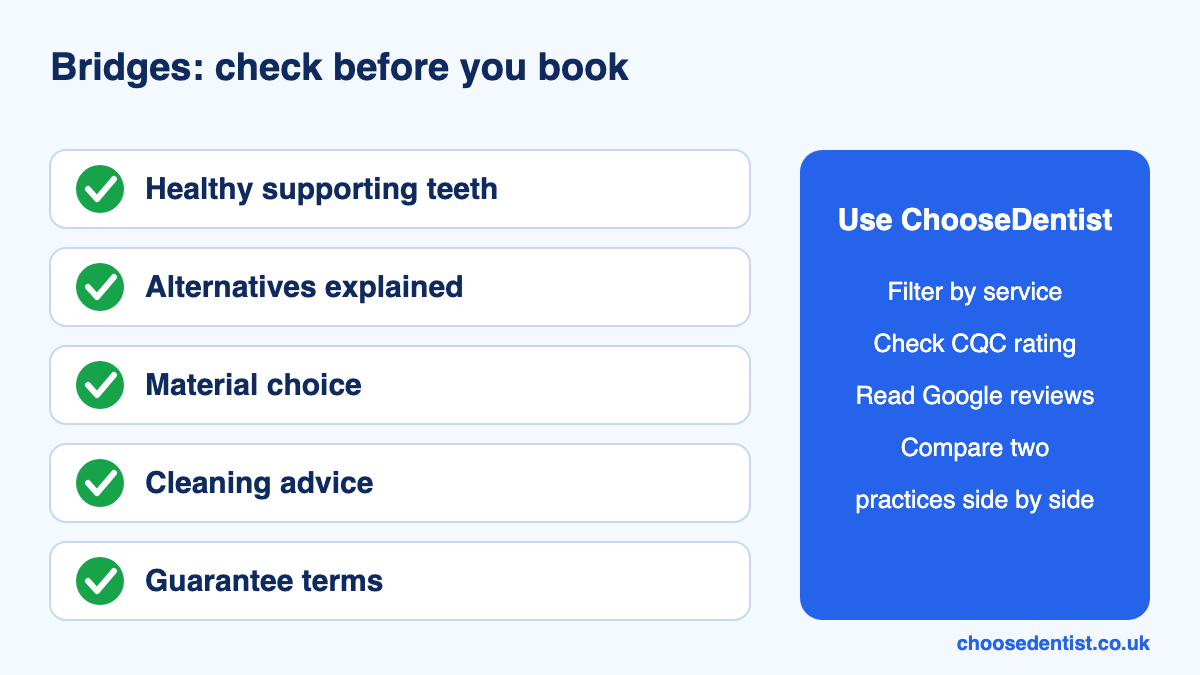
Check the neighbouring teeth are healthy
A bridge puts extra load on the supporting teeth, so decay and gum disease should be treated first.
Understand what is removed
A traditional bridge needs the abutment teeth to be reshaped for crowns. Ask whether a more conservative option would work.
Ask about alternatives
An implant avoids reshaping neighbouring teeth, and a partial denture avoids irreversible work. A good dentist explains each.
Ask which materials are used
Porcelain, metal and zirconia bridges differ in strength, appearance and cost.
Learn how to clean underneath
Plaque collects under the pontic. You will need floss threaders or interdental brushes to keep it clean.
Check the guarantee
Ask what is covered, for how long, and whether regular hygiene visits are a condition.
Questions to ask at your consultation
A good practice will welcome questions. Consider taking this list with you or asking it by phone:
- Is a bridge right for my gap?
- Which type do you recommend?
- How much tooth will be removed?
- What are the alternatives?
- How long should it last?
- What is covered if it fails?
How to use ChooseDentist to find a bridge dentist
ChooseDentist is a free directory and comparison tool for dental practices across the UK. It will not make the decision for you, but it can save a lot of time. Here is a simple way to use it:
- Filter for the treatment. Open the practice directory filtered for bridges, search by postcode and narrow the results to practices that list this service.
- Check the regulatory details. Each practice profile shows whether it is registered with the Care Quality Commission, its inspection rating where one exists, and whether its GDC registration is displayed. Other UK nations have their own regulators, so check the relevant one if you live outside England.
- Read the ratings and reviews. Look at the Google rating and the number of reviews, then read what patients say about how natural the bridges looked and how long they lasted without problems.
- Check the practical details. Profiles help you spot useful extras such as NHS or private options, same-visit temporary bridges, hygiene appointments and payment plans.
- Compare practices side by side. Select up to two practices and open the comparison view to see ratings, services, opening hours and costs in a single table.
- Phone before you book. Use the questions above and trust your instincts about how helpful and open the team is.
Listings are compiled from public sources and information supplied by practices, so details such as services, prices and availability can change. Always confirm them with the practice directly before booking.
Frequently asked questions about bridges
How long do dental bridges last?
A bridge typically lasts around ten years, and many last longer with careful cleaning and regular check-ups, although the supporting teeth must stay healthy.
Are bridges available on the NHS?
Yes, where clinically appropriate. In England they are charged in the highest NHS band, while private bridges cost more depending on the materials.
Is a bridge or an implant better?
It depends. A bridge is quicker and avoids surgery, but it relies on the neighbouring teeth, whereas an implant stands alone and costs more.
Ready to find a practice?
Take the next step by browsing practices that offer bridges, then compare your shortlist to choose the one that feels right for you.
This page offers general information to help you choose a dental practice. It is not clinical advice and does not replace an examination by a registered dentist. Costs shown are rough guides and vary by practice and region.