
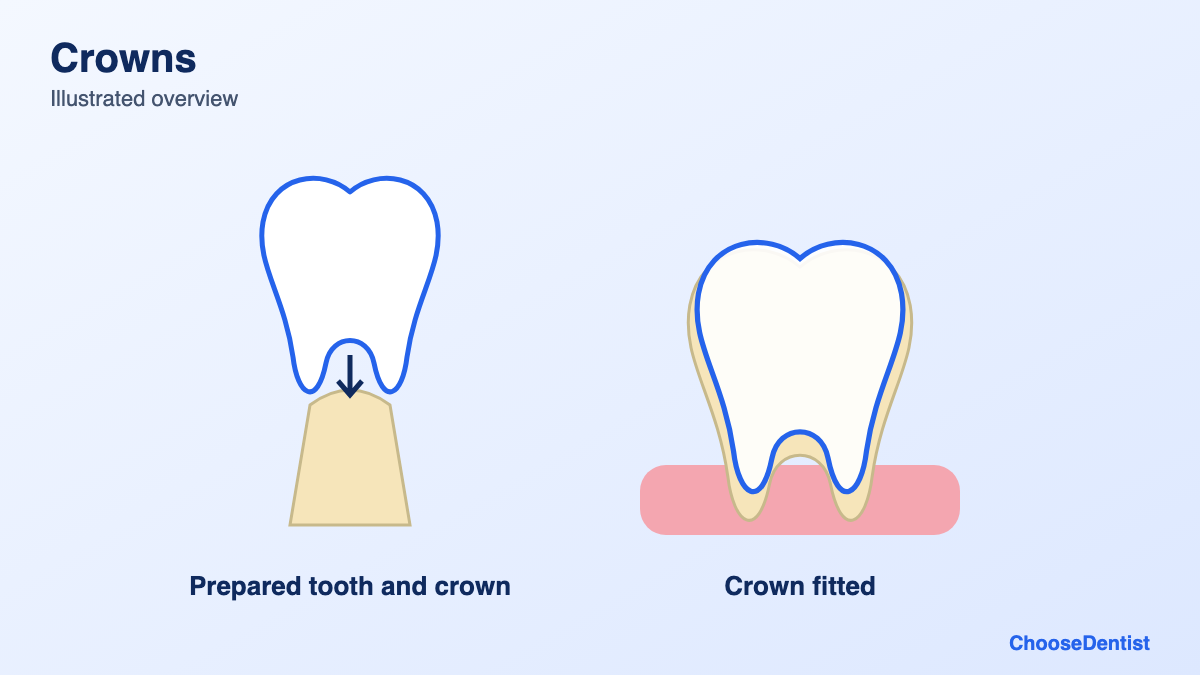
A dental crown is a cap that fits over a damaged or weakened tooth to restore its shape, strength and appearance, and it is one of the most common restorations in dentistry. Crowns are used after root canal treatment, to protect cracked or heavily filled teeth, and to improve the look of worn or discoloured ones. This guide explains how crowns work, what to be cautious about, and how to use ChooseDentist to compare practices that provide them.
Crowns explained in a minute
Prefer to watch? This short narrated video covers what the treatment involves, what to be careful about and how to compare practices. Turn the sound on for the voiceover, or follow the on-screen captions.
What is a dental crown?
A crown covers the whole visible part of a tooth above the gum. The dentist reshapes the tooth to make room, takes an impression or scan, and a laboratory makes the crown from porcelain, ceramic, zirconia, metal or a combination. A temporary crown is worn in the meantime, and the permanent crown is cemented at a second visit. The NHS says crowns are caps that cover a real tooth, often used after damage or decay, and that you will usually wear a temporary crown while the permanent one is made.
Crowns are not permanent, but they are durable. The Wikipedia article on cosmetic dentistry puts the average life of crowns and bridges at nearly ten years, and many last considerably longer. The tooth beneath still needs protecting from decay, so good cleaning around the gum line and regular check-ups remain essential.
What happens when you have a crown
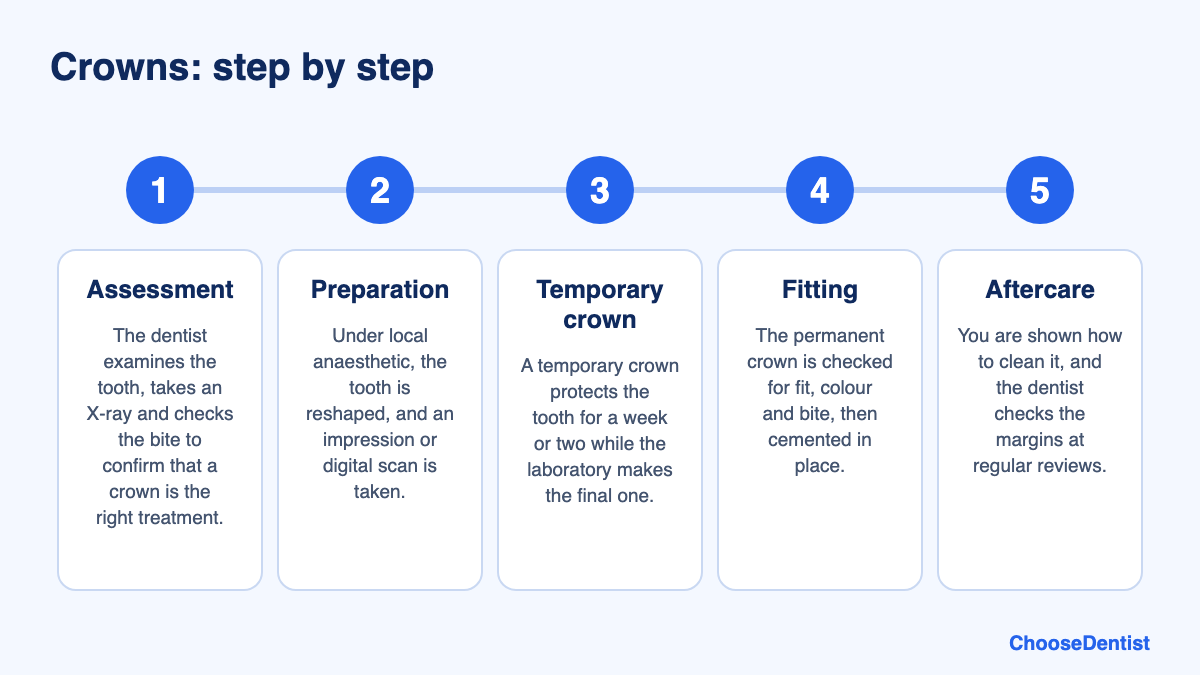
A crown normally takes two visits, about two weeks apart:
- Assessment. The dentist examines the tooth, takes an X-ray and checks the bite to confirm that a crown is the right treatment.
- Preparation. Under local anaesthetic, the tooth is reshaped, and an impression or digital scan is taken.
- Temporary crown. A temporary crown protects the tooth for a week or two while the laboratory makes the final one.
- Fitting. The permanent crown is checked for fit, colour and bite, then cemented in place.
- Aftercare. You are shown how to clean it, and the dentist checks the margins at regular reviews.
Cost and NHS availability
Crowns are available on the NHS when a tooth needs one for health or function, and in England they fall within the highest charge band, so a patient pays one band 3 charge for the course. Private crowns are priced by the practice and commonly cost from about £500 to £1,000 or more per tooth, with metal-free and zirconia crowns at the higher end.
NHS charges and exemptions differ between England, Scotland, Wales and Northern Ireland, and some practices offer upgraded materials for an extra fee, so ask what is included.
What to be cautious about when choosing a dentist for crowns
Not every practice offers the same standard of care, and the right choice depends on your needs. These are the points most worth checking before you commit to crowns:
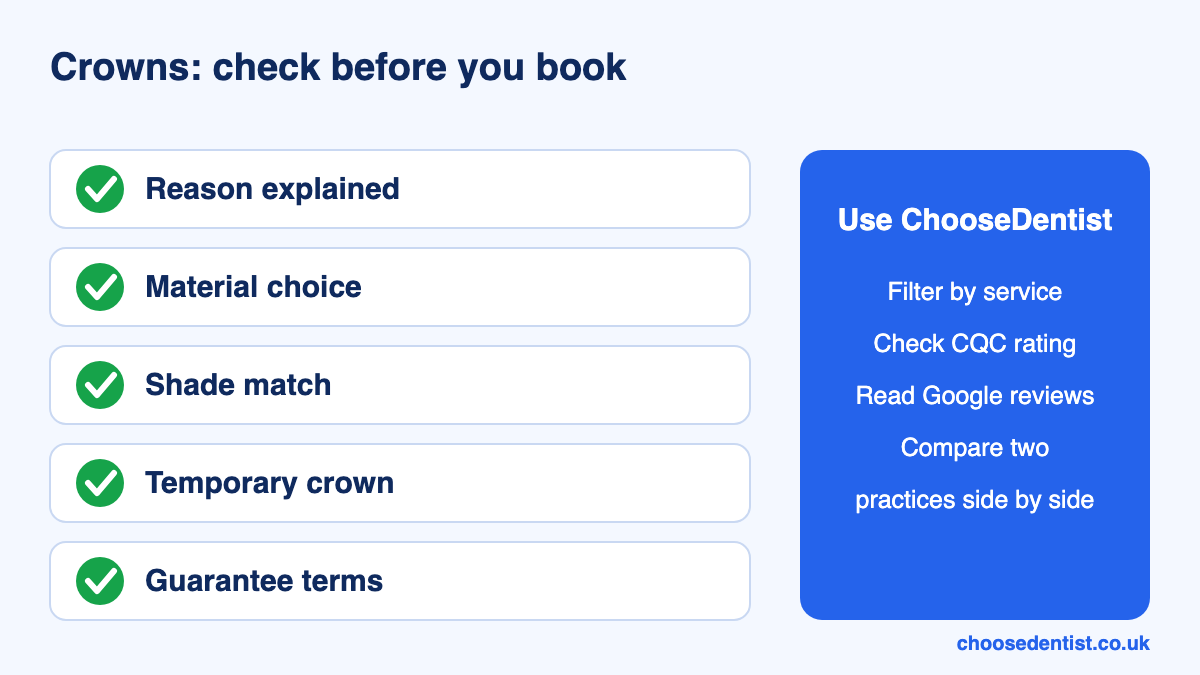
Ask why a crown is needed
A crown involves reshaping the tooth. A good dentist explains why a filling or other option would not do.
Ask about the material
Porcelain, zirconia and metal differ in appearance, strength and cost, and each suits different teeth.
Check the colour match
For front teeth, ask to see the shade in natural light before the crown is cemented.
Do not delay the permanent crown
A temporary crown is weaker and can come off, so book the fitting promptly.
Ask about the margins
Decay can start where the crown meets the tooth, so cleaning and check-ups matter.
Understand the guarantee
Ask what is covered, for how long, and what happens if a crown comes loose or fractures.
Questions to ask at your consultation
A good practice will welcome questions. Consider taking this list with you or asking it by phone:
- Why do I need a crown?
- Which material do you recommend?
- How much tooth will be removed?
- How many visits will it take?
- What does it cost, NHS or private?
- What happens if it comes loose?
How to use ChooseDentist to find a crown dentist
ChooseDentist is a free directory and comparison tool for dental practices across the UK. It will not make the decision for you, but it can save a lot of time. Here is a simple way to use it:
- Filter for the treatment. Open the practice directory filtered for crowns, search by postcode and narrow the results to practices that list this service.
- Check the regulatory details. Each practice profile shows whether it is registered with the Care Quality Commission, its inspection rating where one exists, and whether its GDC registration is displayed. Other UK nations have their own regulators, so check the relevant one if you live outside England.
- Read the ratings and reviews. Look at the Google rating and the number of reviews, then read what patients say about how natural the crowns looked and how well they fitted and lasted.
- Check the practical details. Profiles help you spot useful extras such as NHS or private crowns, temporary crowns, evening appointments and payment plans.
- Compare practices side by side. Select up to two practices and open the comparison view to see ratings, services, opening hours and costs in a single table.
- Phone before you book. Use the questions above and trust your instincts about how helpful and open the team is.
Listings are compiled from public sources and information supplied by practices, so details such as services, prices and availability can change. Always confirm them with the practice directly before booking.
Frequently asked questions about crowns
How long do dental crowns last?
On average around ten years, though many last much longer with good cleaning, regular check-ups and, where needed, a night guard.
Does getting a crown hurt?
The tooth is numbed with local anaesthetic, so it should not hurt. The tooth and gum can be sensitive for a few days afterwards.
Can I get a crown on the NHS?
Yes, when it is clinically needed. In England it is charged as a band 3 treatment, with some people exempt from charges.
Ready to find a practice?
Take the next step by browsing practices that offer crowns, then compare your shortlist to choose the one that feels right for you.
This page offers general information to help you choose a dental practice. It is not clinical advice and does not replace an examination by a registered dentist. Costs shown are rough guides and vary by practice and region.