
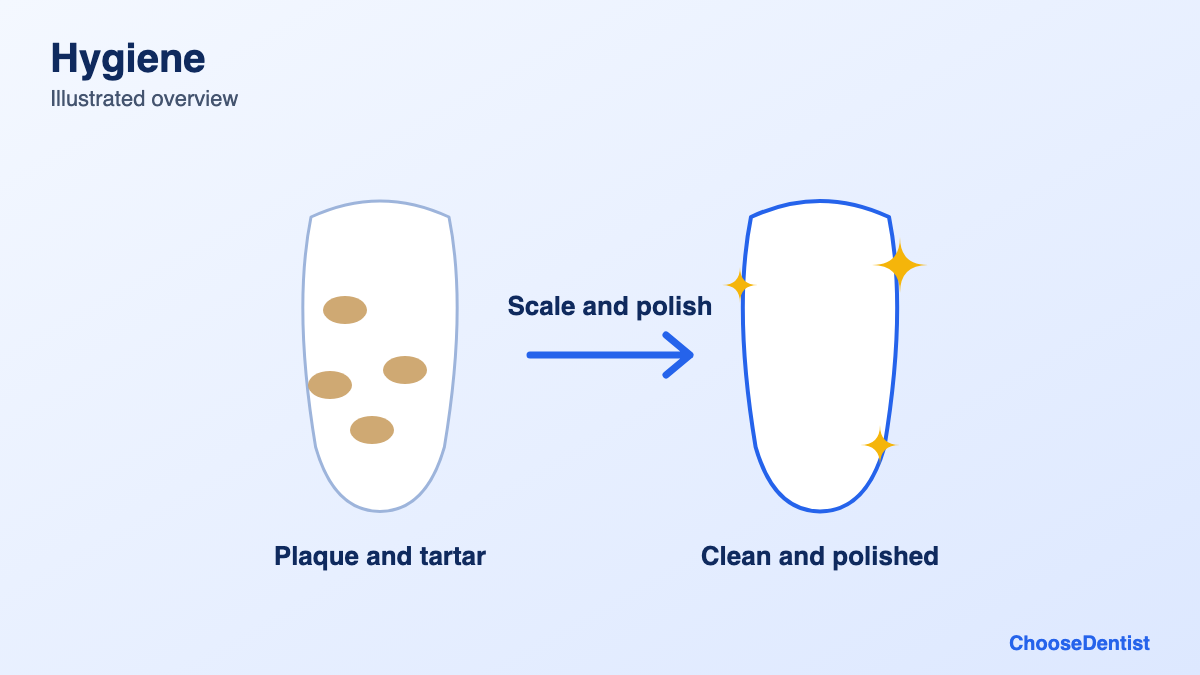
A dental hygiene visit is a professional clean that removes the plaque and tartar that brushing at home cannot reach, and it is one of the most effective ways of preventing gum disease and tooth loss. Hygienists are registered dental professionals who spend their time on prevention, and a good visit leaves you with a cleaner mouth and clear advice for looking after it. This guide explains what happens at a hygiene appointment, what to be cautious about, and how to use ChooseDentist to compare practices that offer them.
Hygiene explained in a minute
Prefer to watch? This short narrated video covers what the treatment involves, what to be careful about and how to compare practices. Turn the sound on for the voiceover, or follow the on-screen captions.
What is a dental hygiene visit?
During a hygiene appointment the hygienist examines your gums, measures the depth of the small pockets around each tooth and removes hardened plaque, known as tartar or calculus, using hand instruments or an ultrasonic scaler. This is usually called scale and polish. The teeth are then polished to remove surface stain, and the hygienist may apply fluoride and show you how to clean between your teeth more effectively.
Hygienists also look for early signs of gum disease, which often causes no pain until it is advanced. If they find bleeding, swollen gums or deepening pockets, they can begin treatment or refer you back to the dentist. Regular visits suit most adults, although how often you need one depends on your own risk, and some people with gum problems are advised to come every few months.
What happens at a hygiene appointment
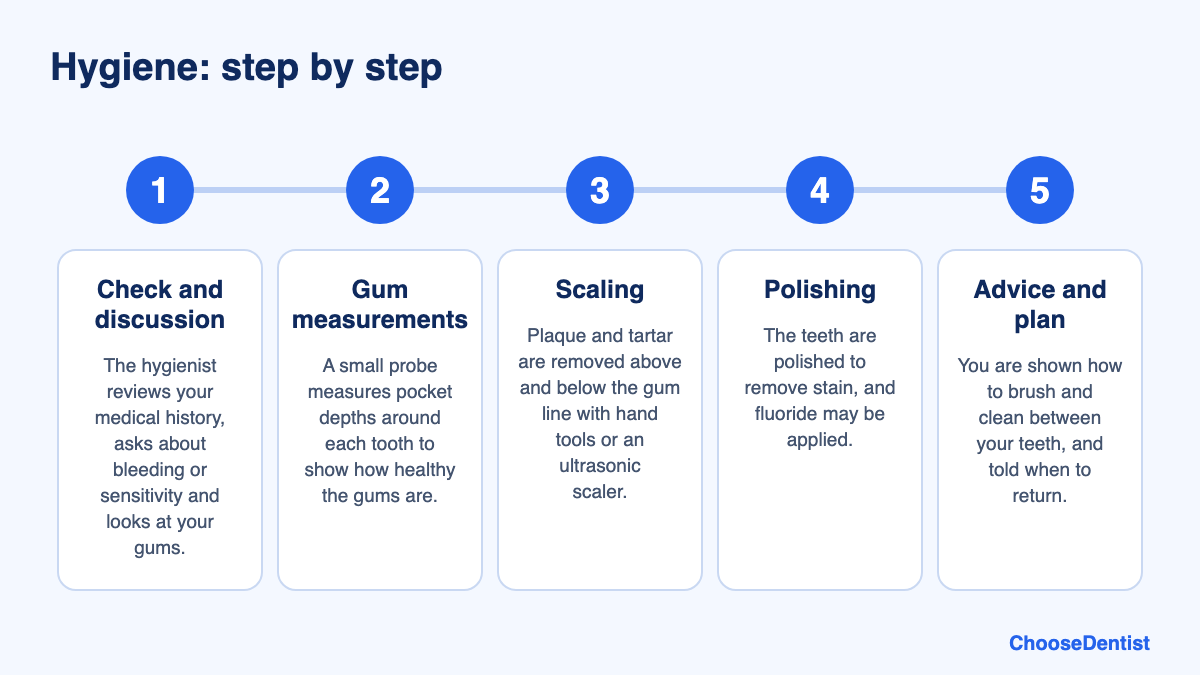
A routine hygiene visit usually lasts 30 to 45 minutes and follows this pattern:
- Check and discussion. The hygienist reviews your medical history, asks about bleeding or sensitivity and looks at your gums.
- Gum measurements. A small probe measures pocket depths around each tooth to show how healthy the gums are.
- Scaling. Plaque and tartar are removed above and below the gum line with hand tools or an ultrasonic scaler.
- Polishing. The teeth are polished to remove stain, and fluoride may be applied.
- Advice and plan. You are shown how to brush and clean between your teeth, and told when to return.
Cost and NHS availability
Simple scaling and polishing is part of NHS dental care when it is clinically necessary, and in England the NHS lists simple gum care such as scaling within the lowest charge band. Many practices, however, provide hygienist visits privately, and private appointments commonly cost from about £50 to £100 depending on the practice and the length of the visit.
NHS charges differ between England, Scotland, Wales and Northern Ireland, so it is worth asking whether a hygiene visit would be NHS or private before you book.
What to be cautious about when choosing a dentist for hygiene
Not every practice offers the same standard of care, and the right choice depends on your needs. These are the points most worth checking before you commit to hygiene:
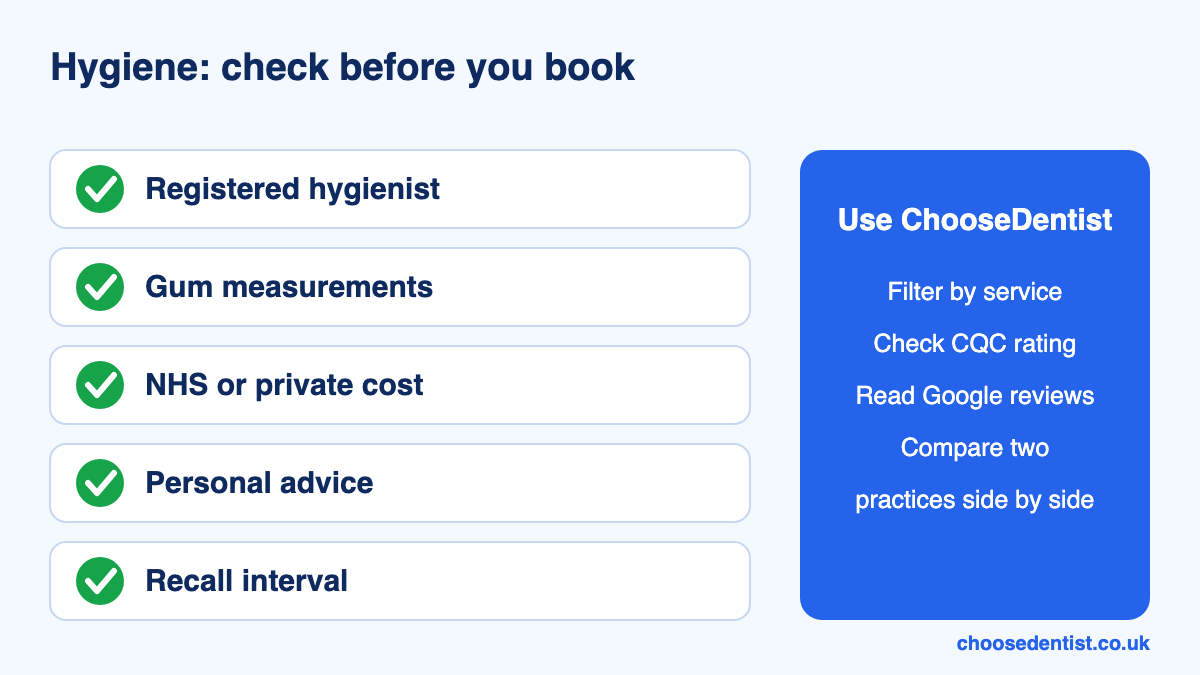
Check the hygienist is registered
Hygienists must be registered with the General Dental Council. You can search the register online, and the practice should be happy to confirm it.
Ask whether it is NHS or private
Some practices offer hygiene on the NHS and others only privately. Ask for the price in writing before the appointment.
Expect an assessment, not just a polish
A genuine hygiene visit includes gum measurements and advice. Be wary of a quick polish with no examination.
Do not ignore bleeding
Gums that bleed when you brush are a warning sign. A good hygienist explains what is causing it and how to improve it.
Ask how often you should return
The right interval varies. A practice that suggests a schedule based on your gums is thinking about your needs.
Be wary of unnecessary extras
Treatments such as repeated deep cleans should be explained and justified by what the hygienist finds.
Questions to ask at your consultation
A good practice will welcome questions. Consider taking this list with you or asking it by phone:
- Is the hygienist registered with the GDC?
- How long is the appointment?
- Is it NHS or private, and what does it cost?
- How healthy are my gums?
- How often should I come back?
- What should I do at home to improve?
How to use ChooseDentist to find a hygiene dentist
ChooseDentist is a free directory and comparison tool for dental practices across the UK. It will not make the decision for you, but it can save a lot of time. Here is a simple way to use it:
- Filter for the treatment. Open the practice directory filtered for hygiene, search by postcode and narrow the results to practices that list this service.
- Check the regulatory details. Each practice profile shows whether it is registered with the Care Quality Commission, its inspection rating where one exists, and whether its GDC registration is displayed. Other UK nations have their own regulators, so check the relevant one if you live outside England.
- Read the ratings and reviews. Look at the Google rating and the number of reviews, then read what patients say about how thorough the hygiene visits were and whether patients left with clear advice.
- Check the practical details. Profiles help you spot useful extras such as hygienist availability, evening and weekend appointments, online booking and whether hygiene visits are offered on the NHS.
- Compare practices side by side. Select up to two practices and open the comparison view to see ratings, services, opening hours and costs in a single table.
- Phone before you book. Use the questions above and trust your instincts about how helpful and open the team is.
Listings are compiled from public sources and information supplied by practices, so details such as services, prices and availability can change. Always confirm them with the practice directly before booking.
Frequently asked questions about hygiene
How often should I see a hygienist?
It depends on your gum health. Many adults are advised every six to twelve months, while people with gum disease may need to come every three to four months.
Does scale and polish hurt?
It should not be painful, although sensitive teeth and inflamed gums can feel uncomfortable. Tell the hygienist if you need a break or numbing gel.
Can I see a hygienist without seeing the dentist?
In many cases yes, because hygienists can treat patients directly within their training, but practices have their own arrangements, so it is worth asking.
Ready to find a practice?
Take the next step by browsing practices that offer hygiene, then compare your shortlist to choose the one that feels right for you.
This page offers general information to help you choose a dental practice. It is not clinical advice and does not replace an examination by a registered dentist. Costs shown are rough guides and vary by practice and region.