
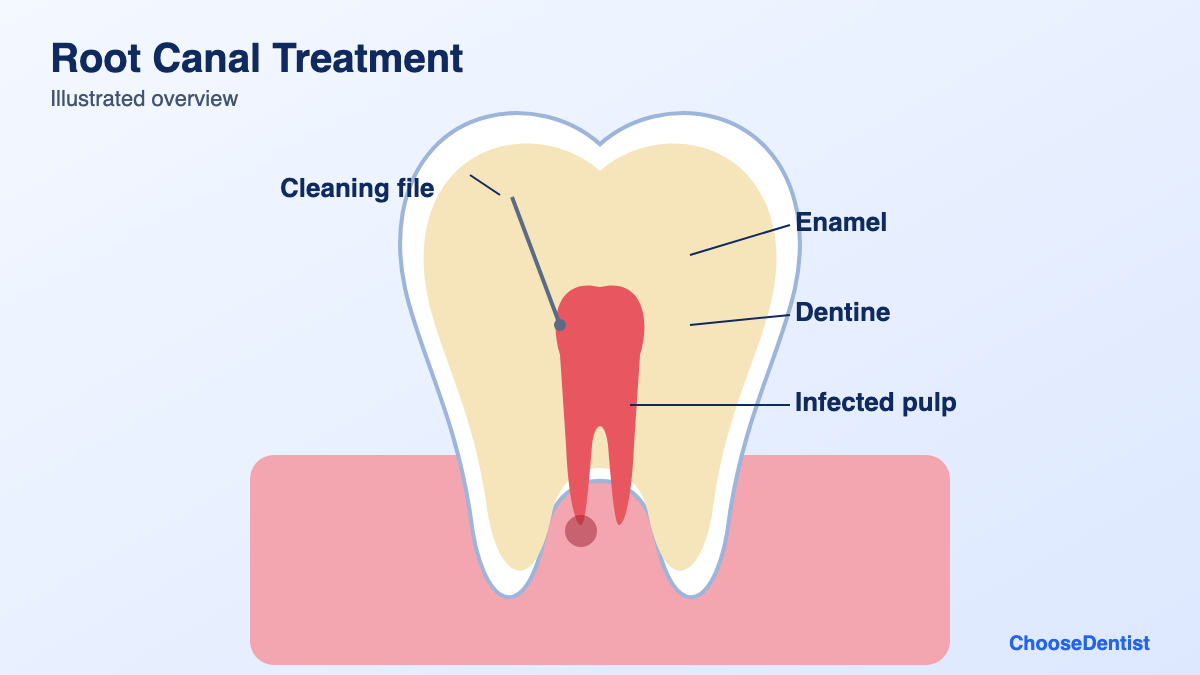
Root canal treatment saves a tooth whose inner pulp has become infected or damaged, relieving pain and avoiding extraction. It has an unfair reputation, as modern treatment is usually no more uncomfortable than a filling. Success, however, depends on thorough cleaning and a proper seal, so choosing the right clinician matters. This guide explains what happens, what to watch out for, and how to use ChooseDentist to compare practices.
Root Canal Treatment explained in a minute
Prefer to watch? This short narrated video covers what the treatment involves, what to be careful about and how to compare practices. Turn the sound on for the voiceover, or follow the on-screen captions.
What is root canal treatment?
Inside each tooth is a soft core called the pulp, containing nerves and blood vessels. When decay, a crack or an injury allows bacteria to reach it, the pulp can become inflamed or infected, causing toothache, sensitivity to heat and cold, swelling or an abscess. Root canal treatment removes the infected pulp, cleans and disinfects the canals inside the roots, and seals them so that bacteria cannot return.
After treatment, the tooth usually needs a filling or crown to protect it, because it can become more brittle. The alternative is usually extraction, which can lead to gaps that need replacing. Complex cases, such as teeth with curved or hard-to-find canals, or those needing retreatment, may be referred to an endodontist, a dentist who specialises in root canal treatment.
What happens during treatment
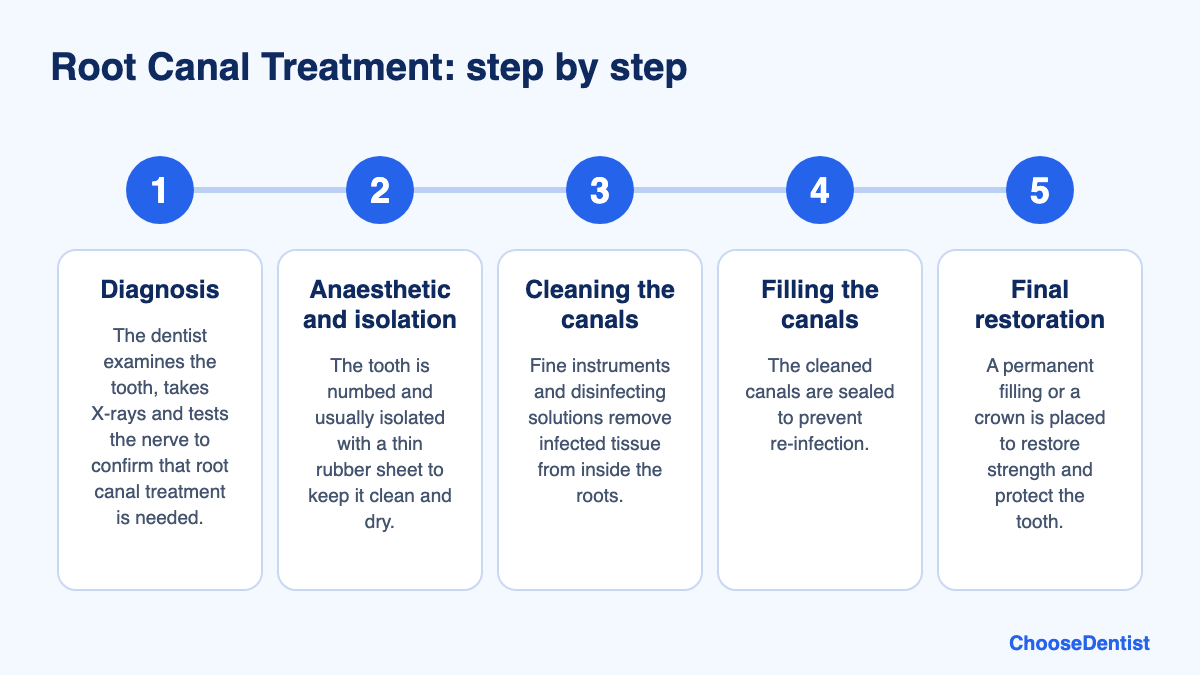
Root canal treatment may take one or more appointments, with these main stages:
- Diagnosis. The dentist examines the tooth, takes X-rays and tests the nerve to confirm that root canal treatment is needed.
- Anaesthetic and isolation. The tooth is numbed and usually isolated with a thin rubber sheet to keep it clean and dry.
- Cleaning the canals. Fine instruments and disinfecting solutions remove infected tissue from inside the roots.
- Filling the canals. The cleaned canals are sealed to prevent re-infection.
- Final restoration. A permanent filling or a crown is placed to restore strength and protect the tooth.
Cost and NHS availability
Root canal treatment is available on the NHS, usually under the middle charge band in England, with different charges in other UK nations. Private costs vary with the tooth and complexity, from a few hundred pounds for a simple front tooth to over a thousand for a molar or for treatment by a specialist.
Ask whether the quote includes the final crown or filling, as this part is often charged separately and is important for long-term success.
What to be cautious about when choosing a dentist for root canal treatment
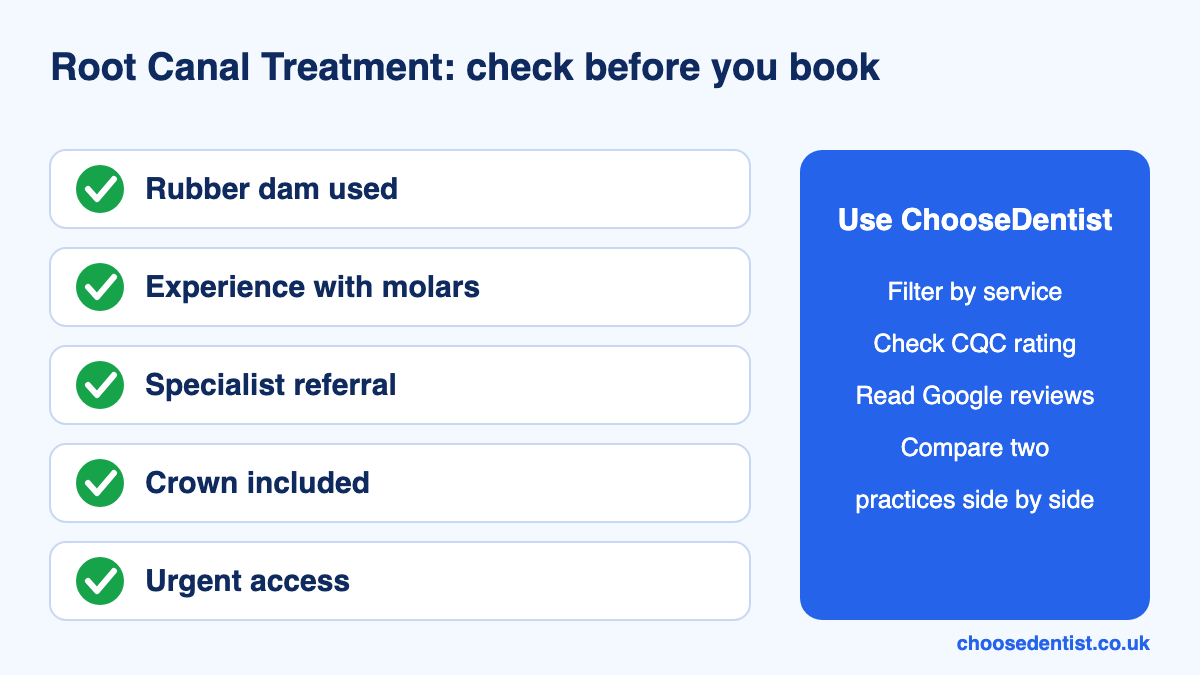
Not every practice offers the same standard of care, and the right choice depends on your needs. These are the points most worth checking before you commit to root canal treatment:
Ask about rubber dam use
Isolating the tooth with a rubber dam is considered best practice because it keeps bacteria out. Ask whether it is used routinely.
Consider the clinician's experience
Molars and previously treated teeth are more difficult. Ask how many of these they treat, and whether they use magnification such as a microscope.
Know when a specialist is appropriate
For difficult or retreatment cases, referral to an endodontist can improve the chance of saving the tooth.
Do not skip the final restoration
A root-treated tooth needs a good filling or crown. Without it, the tooth can fracture or re-infect.
Understand the alternatives
Extraction may be right in some cases. A good dentist explains the pros and cons of each option, including replacement.
Act quickly on swelling or fever
Facial swelling, a high temperature or difficulty swallowing need urgent attention. Contact your dentist or NHS 111 straight away.
Questions to ask at your consultation
A good practice will welcome questions. Consider taking this list with you or asking it by phone:
- Do you use a rubber dam?
- How many root canals do you treat each year?
- Will you refer me if it is complex?
- Is the final crown included?
- How soon can you see me in pain?
- What are my alternatives?
How to use ChooseDentist to find a root canal dentist
ChooseDentist is a free directory and comparison tool for dental practices across the UK. It will not make the decision for you, but it can save a lot of time. Here is a simple way to use it:
- Filter for the treatment. Open the practice directory filtered for root canal treatment, search by postcode and narrow the results to practices that list this service.
- Check the regulatory details. Each practice profile shows whether it is registered with the Care Quality Commission, its inspection rating where one exists, and whether its GDC registration is displayed. Other UK nations have their own regulators, so check the relevant one if you live outside England.
- Read the ratings and reviews. Look at the Google rating and the number of reviews, then read what patients say about comfort during treatment, how quickly emergency appointments were offered and the quality of explanation.
- Check the practical details. Profiles help you spot useful extras such as emergency or same-day appointments, evening hours, NHS or private status and sedation for nervous patients.
- Compare practices side by side. Select up to two practices and open the comparison view to see ratings, services, opening hours and costs in a single table.
- Phone before you book. Use the questions above and trust your instincts about how helpful and open the team is.
Listings are compiled from public sources and information supplied by practices, so details such as services, prices and availability can change. Always confirm them with the practice directly before booking.
Frequently asked questions about root canal treatment
Is root canal treatment painful?
With modern local anaesthetic, treatment is usually no more uncomfortable than having a filling. The toothache beforehand is generally what hurts.
Can I get a root canal on the NHS?
Yes, in many practices, though availability varies. NHS charges apply, with different bands in each UK nation.
What happens if I do not have it done?
An infected tooth typically gets worse, risking abscess and spreading infection. Treatment or extraction is usually needed.
Ready to find a practice?
Take the next step by browsing practices that offer root canal treatment, then compare your shortlist to choose the one that feels right for you.
This page offers general information to help you choose a dental practice. It is not clinical advice and does not replace an examination by a registered dentist. Costs shown are rough guides and vary by practice and region.