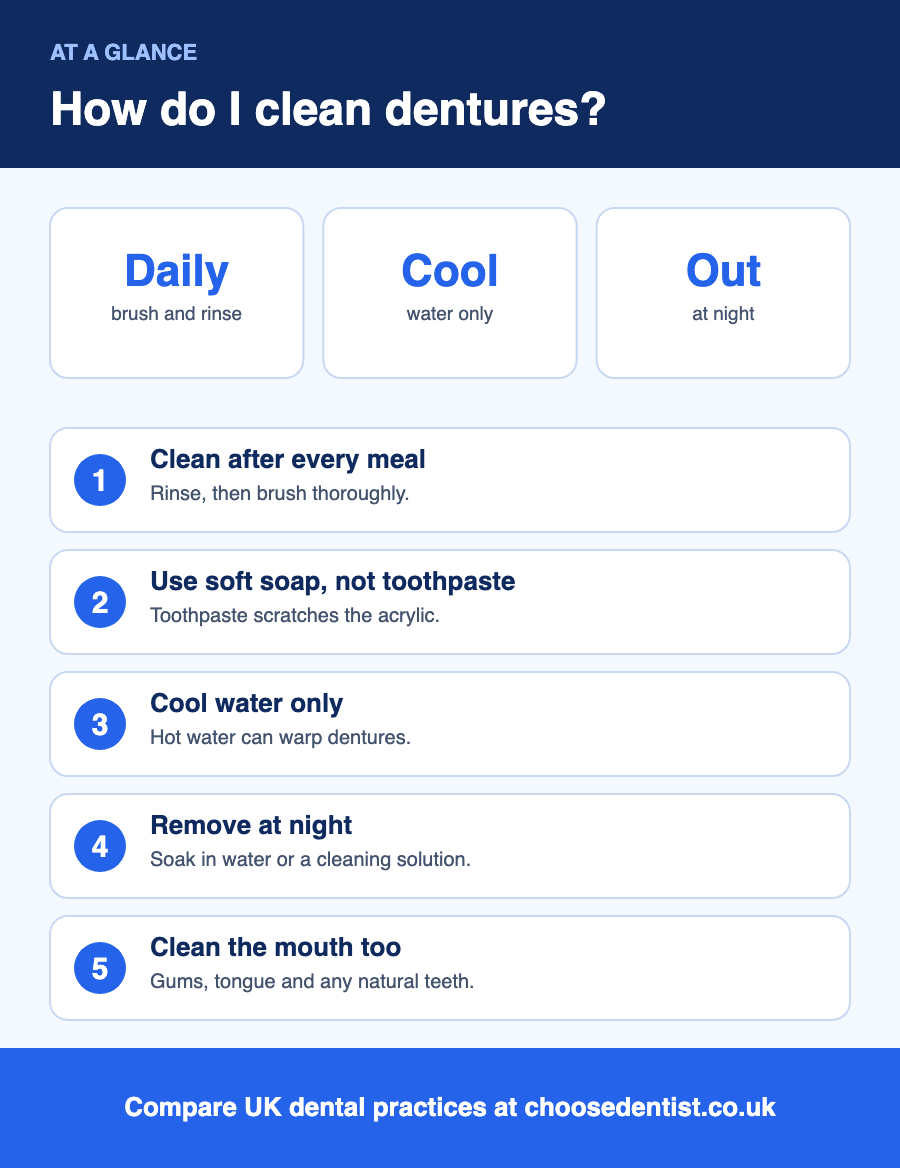
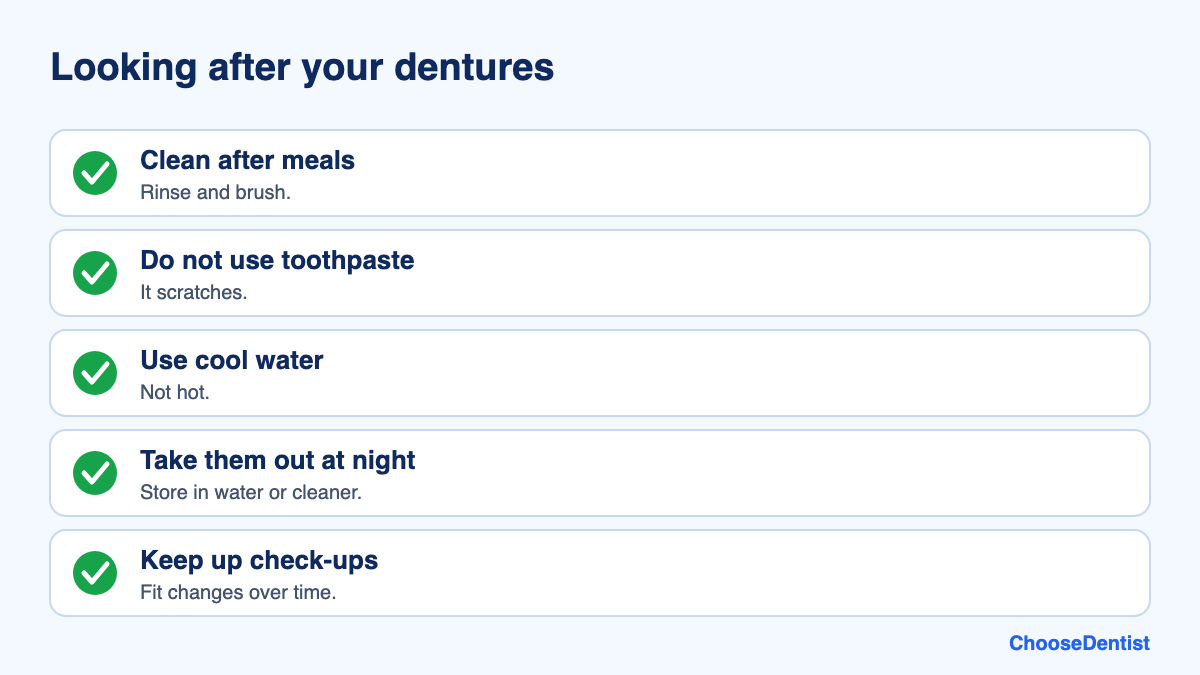
Dentures should be cleaned every day, ideally after each meal and thoroughly before bed, with a soft brush, soft soap or a cleaner made for dentures, and cool or lukewarm water. They should be taken out at night and kept in water or a cleaning solution. Careful cleaning prevents bad breath, stains and mouth infections, and it helps the denture to last. It is not complicated, but a few habits, such as using toothpaste or hot water, are best avoided.
Whether the person wears full or partial dentures, the principle is the same: clean the denture and clean the mouth. A denture that is allowed to collect plaque and food gives bacteria and yeast a place to grow against the gums.
The NHS routine
The NHS website gives a clear routine on its page about dentures. It advises brushing the gums, tongue and any remaining natural teeth with fluoride toothpaste in the morning and evening, cleaning the dentures with soft soap or washing-up liquid, rinsing them after meals and handling them over a bowl of water or a folded towel in case they are dropped. Dentures should be taken out at night and kept in water or a denture-cleaning solution, and they should not be cleaned with toothpaste.
It also says not to wear them overnight unless the dentist advises it. This routine protects both the dentures and the mouth.
| Do | Do not | Why |
|---|---|---|
| Clean with soft soap or a denture cleaner | Use toothpaste on the dentures | Toothpaste is abrasive and scratches acrylic |
| Rinse in cool or lukewarm water | Use hot or boiling water | Heat can warp the denture |
| Use a soft brush | Use a hard brush or harsh chemicals | They abrade the surface |
| Clean over a bowl of water or towel | Clean over a hard sink | Dropped dentures often break |
| Leave them in water or cleaner overnight | Let them dry out or wear them at night | They can warp; the gums need rest |
Step by step
After eating, remove the dentures and rinse them under cool running water to wash away food. Once or twice a day, brush them thoroughly with a soft-bristled brush, such as a denture brush, and a mild soap or a non-abrasive denture cleaner, taking care to reach all surfaces, including the part that sits against the gums and the grooves of the teeth. Rinse well before putting them back.
Cleaning the mouth is just as important. Brush the gums, the tongue and the roof of the mouth with a soft toothbrush, and clean any natural teeth carefully with fluoride toothpaste, paying attention to the teeth that clasps hold. This removes plaque and stimulates the gums.
Soaking
Overnight, the dentures should be stored in a clean container. The Oral Health Foundation advises in its guide to dentures leaving them in a small amount of water overnight to stop them drying out or warping, and a denture-cleaning tablet or solution may be used as directed. The Wikipedia article on dentures notes that chemical soaks, such as effervescent or acid cleansers, are used alongside brushing, which remains the main method.
Soaking in bleach or very hot water can damage the denture, and metal parts can be corroded by some solutions, so the dentist or manufacturer’s instructions should be followed.

What to avoid
Several common habits harm dentures. Toothpaste is abrasive and creates tiny scratches that collect plaque and stain, so the NHS says not to use it on the dentures. Hard-bristled brushes and harsh household cleaners also scratch, and the Wikipedia article warns that stiff bristles can abrade the acrylic. Hot or boiling water can warp the plastic, causing a poor fit.
Dropping dentures is the commonest way of breaking them, which is why a bowl of water or a towel should be underneath when cleaning. Allowing dentures to dry out can also cause distortion, and leaving them on a sunny windowsill or near heat has a similar effect.
Dealing with stains and tartar
Dentures can pick up stain from tea, coffee, red wine and tobacco, and hard deposits of tartar build up in the same way as on natural teeth. Regular brushing and soaking limit this. Persistent deposits should not be scraped off with a sharp instrument, because this scratches the surface. A dentist or hygienist can polish dentures and remove tartar professionally, and ultrasonic cleaning is available in some practices.
Looking after the mouth underneath
The tissues under the denture need rest and care. The Wikipedia article states that dentures should be removed during sleep and likens wearing them overnight to sleeping in shoes. It also notes that denture stomatitis, an inflammation of the tissue beneath, is a common complication. Leaving the denture out for several hours each day, cleaning it thoroughly and massaging the gums gently with a soft brush help to keep the tissues healthy.
Cleaning partial dentures
Partial dentures need the same care as full ones, with some extras. The clasps that hold them to natural teeth can trap plaque, and the natural teeth they grip are at higher risk of decay and gum disease, so those teeth should be brushed carefully with fluoride toothpaste and cleaned between with interdental brushes. Metal-framework partial dentures should not be left in some soaking solutions, which can tarnish the metal, so a cleaner recommended by the dentist should be used. Taking the denture out to clean the teeth underneath is important.
Denture adhesive
A well-fitting denture should not need adhesive, but some wearers use it for extra confidence. It should be applied sparingly to a clean, dry denture and cleaned off completely, both from the denture and the gums, at the end of each day. Needing more and more adhesive suggests that the denture no longer fits, and it is better to have it relined or replaced than to rely on glue.
Signs that cleaning is not enough
Persistent bad breath, a coating on the denture that does not come off, discoloured patches, redness or soreness of the gums and a bad taste can all indicate that plaque, tartar or infection is present. A dentist or hygienist can polish the denture, remove deposits professionally and check the mouth for denture stomatitis or other problems. Regular check-ups are advised even for people who have no natural teeth.
NHS and private options across the UK
Cleaning advice is part of the care provided with dentures, whether on the NHS or privately. The NHS says that a denture that fits poorly or is not cleaned properly can cause a sore mouth, infections and further problems with eating and speaking, so regular check-ups matter. Charging for NHS dentistry differs across the four nations. England has three bands and an urgent charge, with dentures in the highest band, Wales numbered bands and an urgent charge with a contract reform under way, Scotland free examinations and free treatment under 26 with a capped share of the cost for other adults, and Northern Ireland a percentage of the dentist’s fee up to a ceiling per course. Denture cleaning products are bought by the patient, and a hygiene visit is a private or NHS service depending on the practice.
Private practices may offer professional denture cleaning or polishing as an additional service, with fees set by the practice. It is worth asking at check-ups whether the dentures need professional attention.
When to seek advice
Anyone who notices persistent soreness, red patches under the denture, white deposits, a bad taste or a loose fit should see the dentist. A broken or cracked denture should be repaired professionally, as home repairs can harm the mouth.
The ChooseDentist directory of denture practices can be searched by postcode, with CQC and Google ratings displayed where available. Two practices can be compared side by side, and the details of aftercare should be confirmed directly with the practice.