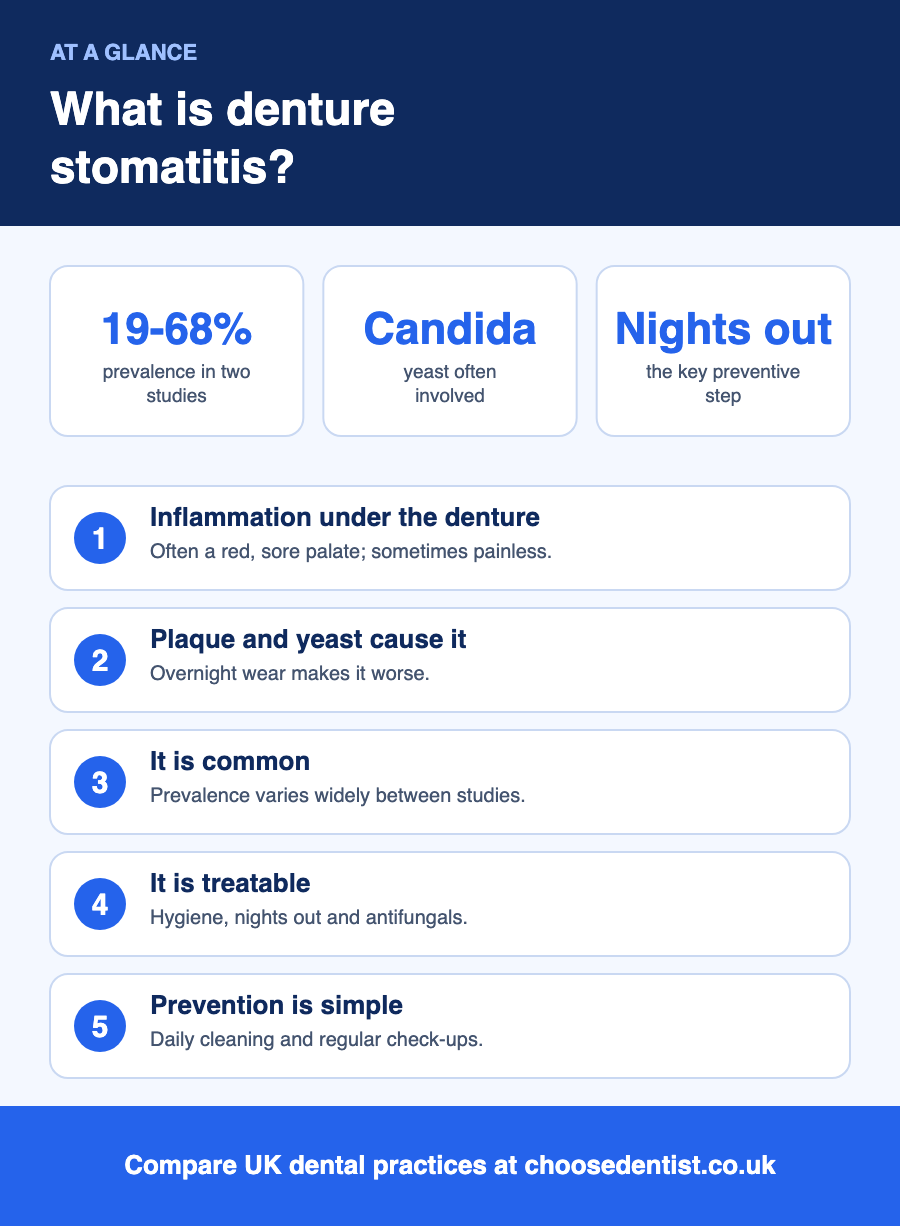
Denture stomatitis is an inflammation of the tissue under a denture, most often an upper one, and it is one of the most common problems among people who wear them. It typically appears as a red, sometimes swollen palate that may be sore or may cause no discomfort at all, and it is usually linked to a build-up of plaque and yeast on the denture, often made worse by wearing it overnight.
The condition is treatable and largely preventable, and in most cases it clears up with improved cleaning, leaving the denture out at night and, where necessary, an antifungal treatment. Recognising it early is the key, because it can persist unnoticed for a long time under a denture.
How common it is
The Wikipedia article on dentures describes denture stomatitis as a common complication, citing a prevalence of 18.8 per cent in one study of 420 patients and 67.5 per cent in another study of 80 people, which shows how widely the figures vary between populations and definitions. Whatever the exact rate, a large number of wearers are affected at some time.
It is more frequent in people who wear their dentures day and night, those with poor denture hygiene, older patients and those with a dry mouth or certain medical conditions such as diabetes, and in wearers of ill-fitting dentures.
| Feature | What to know | Notes |
|---|---|---|
| What it is | Inflammation of tissue under a denture | Most often under an upper denture |
| Main cause | Plaque and yeast on the denture | Worse if worn day and night |
| Signs | Red, sore or burning palate; sometimes none | Redness stops at the denture edge |
| Treatment | Cleaning, leaving out at night, antifungal medicine | Reline or replace an ill-fitting denture |
| Prevention | Daily cleaning and nights out of the mouth | Regular check-ups |
What causes it
The usual cause is a film of plaque containing yeast, particularly Candida, which grows on the fitting surface of the denture and in the porous acrylic, in contact with the palate. The article notes that plaque and tartar build up on dentures, and that stomatitis follows. Wearing the denture continuously gives the yeast a warm, moist, low-oxygen environment and prevents saliva from cleansing the tissue.
Other factors include an ill-fitting denture that rubs and damages the tissue, a dry mouth, smoking, a high-sugar diet, antibiotics or inhaled steroids that disturb the balance of organisms in the mouth and poor general health. Sometimes it is a mixture of causes.
Symptoms
Many people have no symptoms and the problem is discovered at a check-up. Others notice redness, swelling, soreness or a burning sensation under the denture, a bad taste or bad breath, small white patches, bleeding when the denture is removed or cracks at the corners of the mouth. The palate may look uniformly red or speckled with red dots, and the redness stops sharply at the edge of the denture.
Treatment
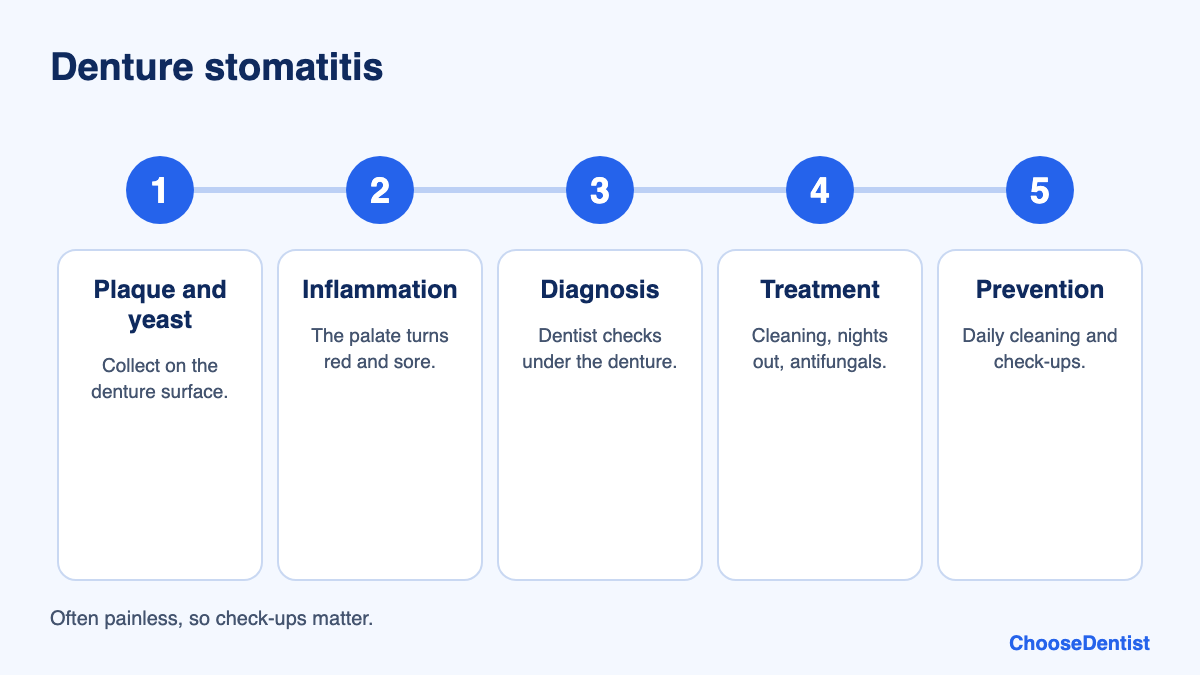
Treatment starts with hygiene and rest for the tissues. The dentist will advise cleaning the denture thoroughly twice a day with a soft brush and soap, soaking it in a suitable cleaning solution, leaving it out at night and brushing the palate and tongue gently. These measures alone often clear mild cases.
For more persistent infection, an antifungal medicine may be prescribed, such as a gel, a lozenge or a rinse, and the denture itself may need to be treated or replaced because yeast can lodge in the acrylic. An ill-fitting denture should be relined or remade. Underlying issues such as a dry mouth, diabetes or smoking should be addressed.
Prevention
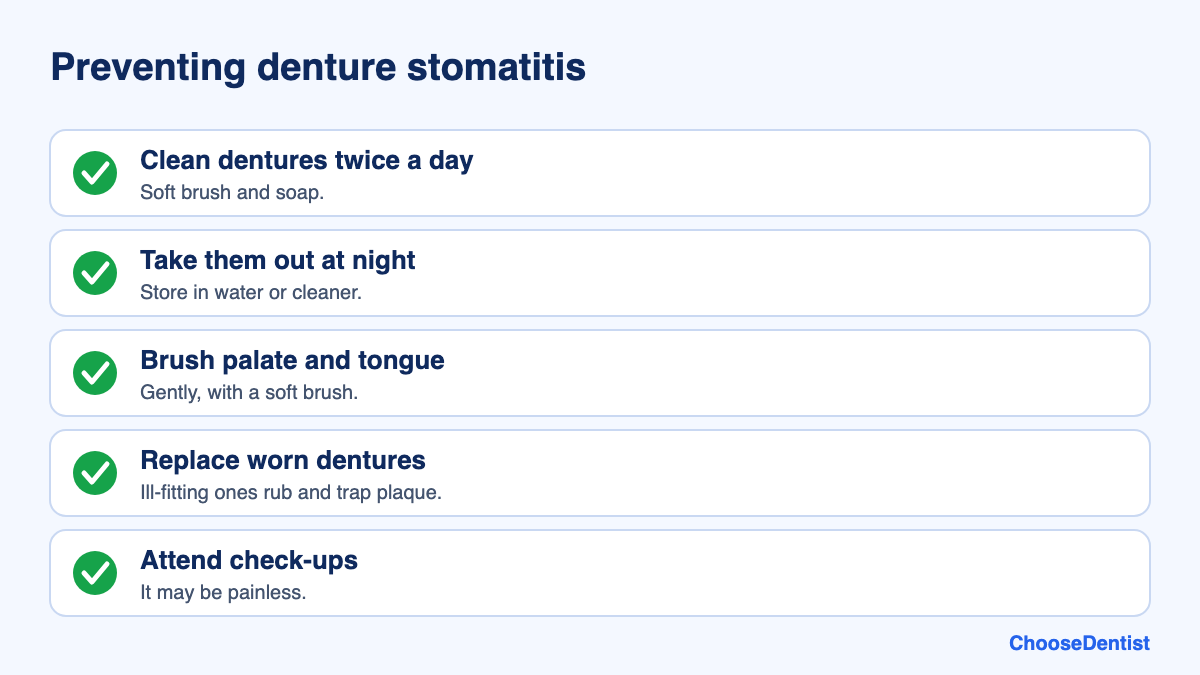
The same habits that prevent it also treat it. The NHS advises cleaning dentures with soft soap or washing-up liquid, rinsing them after meals, taking them out at night and storing them in water or a cleaning solution. The Wikipedia article likens wearing dentures overnight to sleeping in shoes and recommends removing them during sleep.
Regular dental check-ups allow early detection, and dentures should be replaced or relined when they no longer fit. Stopping smoking, controlling blood sugar and keeping a healthy diet also reduce the risk.
Is it serious?
Denture stomatitis is generally a minor, though uncomfortable, condition and responds well to treatment. It is not usually dangerous, but it can recur if the underlying causes are not addressed, and a persistent red or white patch that does not respond to treatment should be examined to rule out other conditions. Patients should not ignore symptoms that last more than a couple of weeks.
Who is most at risk?
Certain groups are more susceptible. People who wear dentures continuously, those with poorly fitting dentures, smokers and people with diabetes are more at risk, as are those who take medicines that dry the mouth, use inhaled steroids or have had antibiotics. Older adults in care homes are particularly prone, because oral hygiene can be difficult to maintain. Regular dental checks and support with cleaning are important for those who cannot manage it themselves.
Cleaning methods that help
Brushing the denture with soap and a soft brush is the foundation. For stomatitis, dentists sometimes advise soaking the denture in a suitable cleaning solution or a dilute antiseptic as directed, and brushing the palate gently each day. Patients should not use strong bleach or hot water, which can damage the denture. Rinsing the denture thoroughly before putting it back in the mouth prevents irritation, and replacing a toothbrush or denture brush regularly keeps it effective.
Living with a recurring problem
Some people find that stomatitis returns despite good habits. The dentist can look for contributing factors, such as an ill-fitting denture, a dry mouth, medicine effects or diabetes, and may recommend a new denture with a smoother fitting surface. A routine of cleaning, leaving the denture out at night and having regular reviews usually keeps it under control. Persistent redness or soreness should always be checked.
Stomatitis and general health
In most people stomatitis is a local problem, but it can sometimes signal a wider issue. Uncontrolled diabetes, a weakened immune system, a poor diet or certain medicines can make mouth infections more likely, and persistent or recurrent episodes may justify a conversation with a GP. Good control of any underlying condition improves oral health, and a dentist who finds recurring stomatitis may suggest a blood test or medication review. In frail older people, keeping dentures clean also reduces the bacteria that can be inhaled into the lungs.
What to expect at the dentist
At the appointment the dentist will look at the palate under the denture, assess its fit and check the surface for deposits. They may take a swab if infection is suspected and will discuss cleaning habits. Treatment is usually started the same day, with a plan to review progress in a couple of weeks. If the denture is old, cracked or rough, replacement may be advised, since yeast can lodge in tiny pores and reinfect the mouth.
NHS and private options across the UK
The condition can be diagnosed and treated by an NHS dentist, and NHS dentures are provided where clinically needed, as the NHS explains on its page about dentures. Repairs are always free on the NHS in England. Charging for NHS dentistry differs across the four nations. England has three bands and an urgent charge, with dentures in the highest band, Wales numbered bands and an urgent charge with a contract reform under way, Scotland free examinations and free treatment under 26 with a capped share of the cost for other adults, and Northern Ireland a percentage of the dentist’s fee up to a ceiling per course. Antifungal medicines are prescribed by the dentist or GP, with prescription charges varying across the UK nations.
Private practices offer the same care, with fees set by the practice. A hygiene appointment and professional denture cleaning can help to remove deposits that home care misses.
Getting help
A patient who suspects stomatitis should see the dentist, and wearers should have regular check-ups even if they feel fine. A practice that takes time to check under the denture and explain how to clean it is likely to provide good aftercare.
The ChooseDentist directory of denture practices can be searched by postcode, with CQC and Google ratings displayed where available. Two practices can be compared side by side, and aftercare and costs should be confirmed directly with the practice.