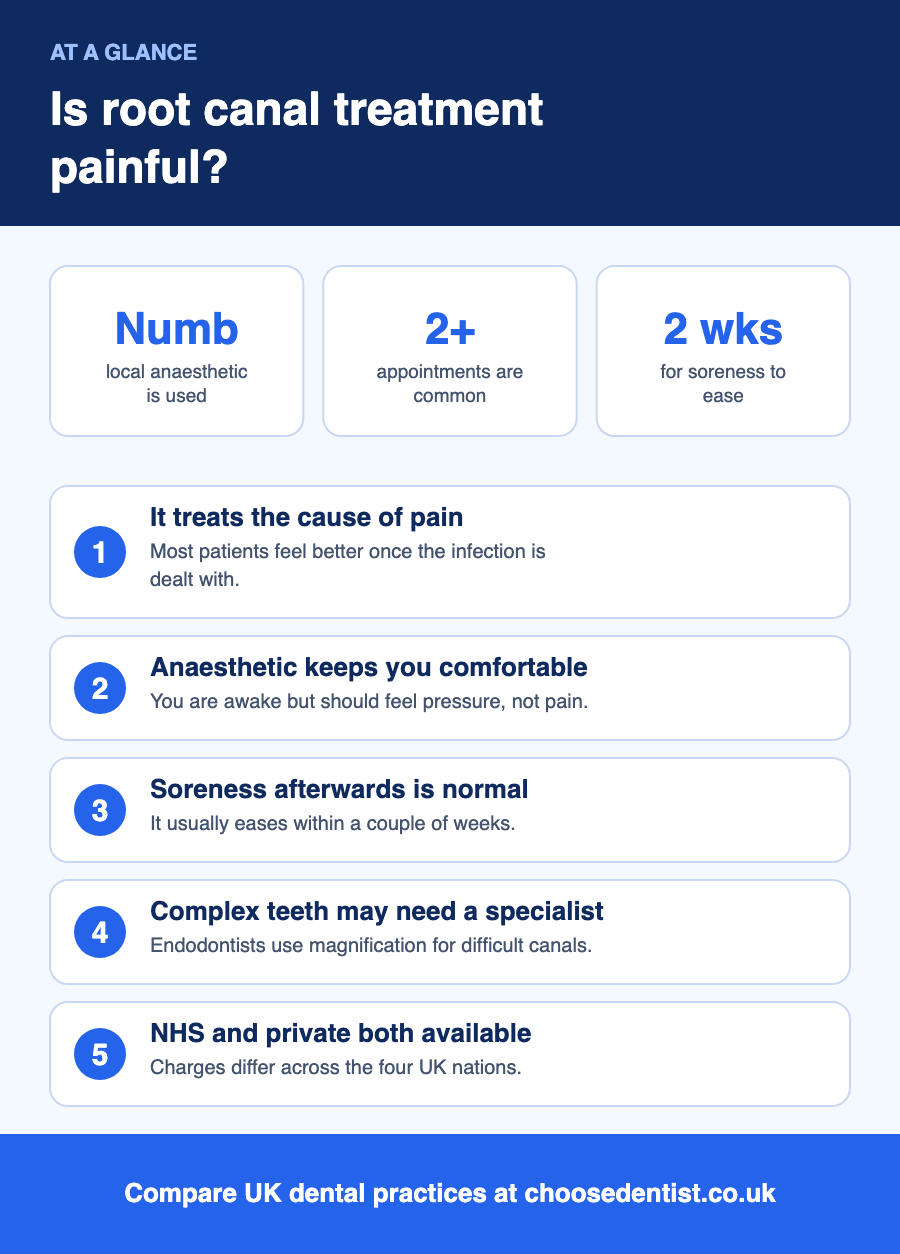
Modern root canal treatment is usually no more uncomfortable than having a filling. The reputation it has for being painful dates from a time when anaesthetics and techniques were less effective, and it also owes something to the fact that people typically arrive for treatment already in pain from an infected tooth. In most cases the treatment relieves that pain, rather than causing it.
That does not mean that nothing is felt. The injection of local anaesthetic can sting, an inflamed tooth can be harder to numb, and the days afterwards are often tender. Understanding what is normal, what can be done about discomfort and when to call the dentist makes the experience far less daunting.
What the NHS says
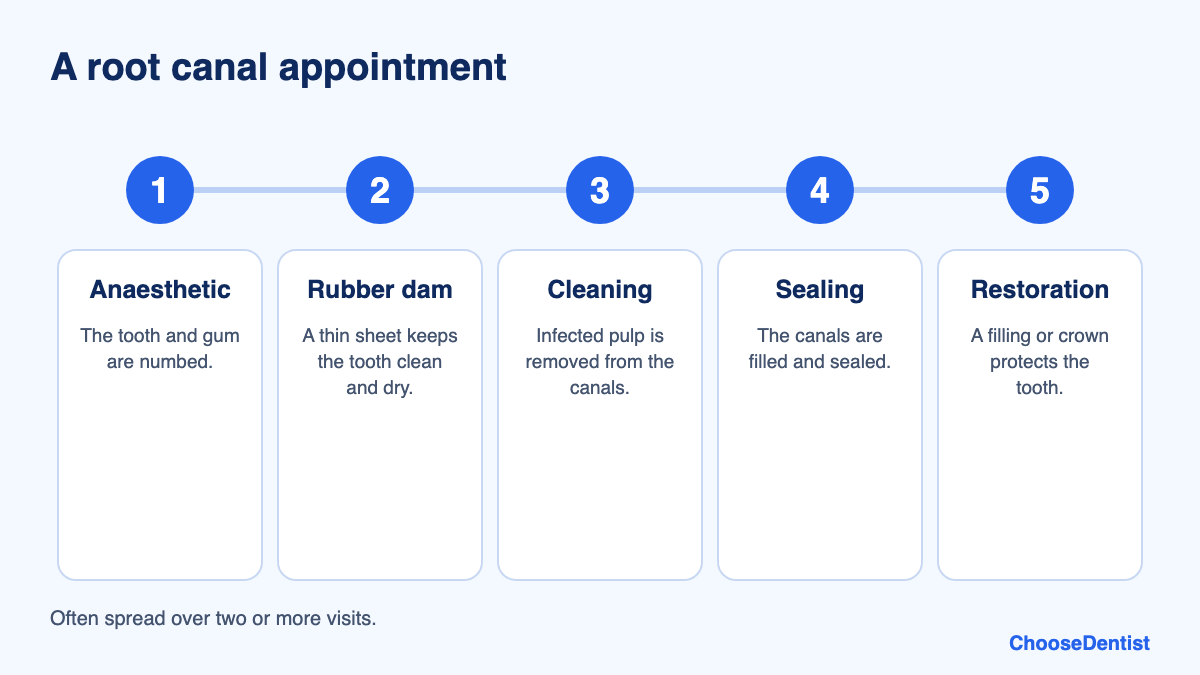
The NHS website explains that root canal treatment removes an infection from inside a tooth and that the tooth is then cleaned and filled to prevent reinfection. It states that patients are usually given a local anaesthetic, so they are awake but should not feel pain. The dentist drills a hole in the tooth and removes the infected pulp, drains any abscess, cleans and shapes the inside of the root canals, then fills and seals them. A crown may be needed afterwards if the tooth was badly infected.
The Wikipedia article on the root canal makes a related point, noting that where damage to the pulp is irreversible, treatment can relieve the associated dental pain. For many patients the worst of the experience is the toothache that led them to seek help, and the first night after treatment is often better than the one before it.
| Stage | What patients commonly feel | What helps |
|---|---|---|
| Before treatment | Toothache from the infected tooth | Painkillers and urgent dental advice |
| Anaesthetic injection | A brief sting | Numbing gel and a slow injection |
| During treatment | Pressure and vibration, not sharp pain | More anaesthetic if needed; optional sedation |
| First 2 to 3 days | Soreness when biting; some swelling | Paracetamol or ibuprofen, soft foods |
| Within a couple of weeks | Gradual improvement | Follow-up visits and a permanent filling or crown |
During the appointment
Treatment begins with the anaesthetic. A numbing gel on the gum can take the edge off the injection, and the dentist will check that the tooth and surrounding tissue are properly numb before starting. A thin rubber sheet, known as a rubber dam, is usually placed around the tooth to keep it dry and clean, which also makes the procedure more comfortable for the patient, since it keeps instruments and fluids out of the mouth.
The sensations that follow are mainly pressure, vibration and the sound of the drill. Patients who feel any sharp pain should say so at once, and the dentist can add more anaesthetic. A tooth with a severe infection can be stubborn about numbing, because the acidity of inflamed tissue reduces the effect of the anaesthetic, so extra time or a different injection technique may be needed.
How long it takes
According to the NHS, the treatment usually takes two or more appointments, each of an hour or two or longer. Between visits, a temporary filling protects the tooth. Some dentists complete treatment in a single longer visit, particularly for teeth with a single straightforward canal, while molars and teeth with curved or hard-to-find canals take longer. Long appointments are tiring for the jaw, and patients can ask for breaks.
A hole in a tooth that is awaiting a permanent restoration needs to be protected, and a delay between completing the root filling and placing the final filling or crown can lead to leakage and reinfection, so it is sensible to arrange that final stage promptly.
Recovery and pain afterwards
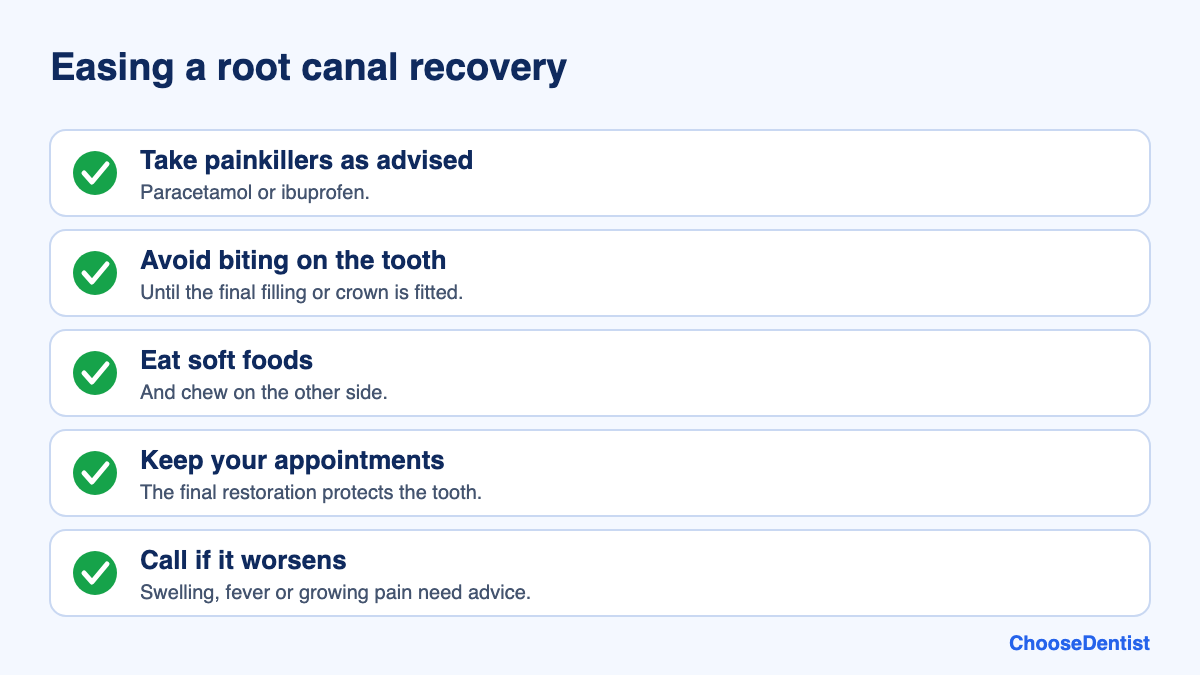
The NHS says that the jaw and face may stay numb for several hours, and that the area may be swollen and sore, improving within a couple of weeks. Taking paracetamol or ibuprofen, avoiding knocking the mouth, going to follow-up appointments and keeping up regular dental check-ups are the standard advice. Patients are generally advised not to bite on the treated tooth until it has been permanently restored, because a tooth that has lost its pulp is more brittle.
Tenderness for a few days is normal, particularly when biting, since the tissue around the tip of the root has been inflamed. It should lessen steadily. Pain that is getting worse after the third or fourth day, swelling of the face, a high temperature or a bad taste are not normal and need a call to the dentist.
What can make treatment harder
Some situations are more difficult. Teeth with an active abscess can be more painful to treat and may take more than one visit to settle. Molars have several roots and canals, and the Wikipedia article states that unusual canal shapes, complex branching and multiple canals are the main causes of root canal treatment failures, which is why more complicated teeth are often referred to a specialist endodontist, who uses magnification such as a microscope to see the canals more clearly.
Anxiety can also make pain feel worse. Patients who are very nervous can ask about sedation, which relaxes them while the local anaesthetic does the numbing, and a patient and unhurried approach goes a long way.
When pain does not ease
Occasionally a tooth flares up between appointments or after the root filling is done. This can happen when inflammation around the root is slow to settle, and it usually responds to painkillers and time. Persistent or severe pain, a bite that feels high or swelling should be reported, as the dentist may need to adjust the bite, drain an abscess or clean the canals again. In a small number of cases the infection returns months or years later, and the tooth may be retreated by a specialist or, if necessary, removed. Keeping to the follow-up schedule is the surest way of catching these problems early.
Myths worth setting aside
A few misconceptions persist. One is that a root canal removes the tooth’s life and leaves it dead; in fact the infected pulp is removed, but the tooth continues to be held in the jaw by the surrounding tissues. Another is that treatment makes people ill, an idea that has no support in mainstream dental practice. A third is that extraction is always easier and less painful, whereas it carries its own recovery and the need to replace the tooth. Reassurance from a dentist who explains each step is worth more than anything read online.
NHS and private options across the UK
Root canal treatment is available on the NHS and privately. The NHS says that root canal treatment is a band 2 charge in England, and it is provided by NHS or private dentists, sometimes with the involvement of an endodontist. A band 2 charge covers all the work within the course of treatment, including the filling, but the crown, if needed, is a band 3 item.
The other nations have their own systems. Wales uses numbered bands and an urgent charge, with a contract reform under way, Scotland provides free examinations and charges adults over 26 a share of the cost up to a maximum, and Northern Ireland charges a percentage of the dentist’s fee up to a ceiling. Private fees vary with the tooth and complexity, commonly from a few hundred pounds for a front tooth to £1,000 or more for a molar, and more again for a specialist.
Choosing a dentist
A dentist who explains the procedure, checks that the tooth is numb, uses a rubber dam and allows time for questions is likely to make the experience easier. Patients with a history of difficult numbing or a complex tooth can ask whether the dentist routinely carries out root canal treatments or would refer to a specialist.
The ChooseDentist directory of root canal practices can be searched by postcode, with CQC and Google ratings displayed where available. Two practices can be compared side by side, and details of emergency appointments, NHS availability and costs should be confirmed directly with the practice.